Employers Federation Annual Employment Law & HR Conference 2026
23/09/2026
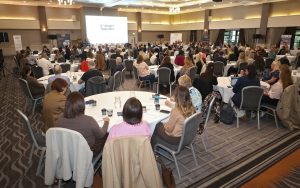
Our Annual Employment Law & HR Conference took place on 16 September 2026 at the Crowne Plaza, bringing together HR professionals and business leaders from across Northern Ireland for a day of practical learning, discussion and networking.
This year was particularly special as we celebrated the 160th anniversary of the Employers Federation. We were delighted to welcome around 200 companies and guests, making this the largest Conference in our history. To mark the occasion, we gave each delegate a special Federation bag filled with treats and gifts contributed by our members.
As always, our aim was to provide employers with clear, practical guidance on the issues shaping today’s workplaces. This year’s programme explored a diverse mix of employment law developments, emerging workplace challenges, organisational culture, technology, investigations and industrial relations.
The conference also gave us an opportunity to reflect on the rapidly changing employment landscape and consider what lies ahead for employers navigating legislative reform, technological change and evolving workforce expectations.
Welcome and Tribute
The conference opened with a welcome from Michelle McGinley, Managing Director of Employers Federation and was followed by a moving tribute to our former Managing Director, Peter Bloch delivered by his good friend, Rose Neill. Delegates reflected on Peter’s significant contribution to the employers’ community and his lasting legacy within employment relations in Northern Ireland. We were privileged to be joined by Peter’s wife, Julia and his daughter Sacha for the tribute.
Gender Critical Beliefs in Northern Ireland: Where Are We Today?
Gráinne Rice, Employment Lawyer, opened the substantive sessions by examining the evolving legal position surrounding gender critical beliefs and workplace protections. Having represented the respondent in Northern Ireland’s first gender critical belief case, Gráinne drew on her experience to explain recent developments and explore how employers can navigate competing rights and beliefs while maintaining respectful and inclusive workplaces.
The discussion reinforced the importance of carefully balancing freedom of belief, dignity and inclusion, while ensuring that workplace policies and decision-making remain legally compliant and practically effective.
Medicinal Cannabis and the Workplace
Lauren Hudson (Employment Lawyer) then explored one of the fastest emerging workplace challenges facing employers which is the issue of medicinal cannabis.
The session examined the growing use of prescribed cannabis-based medicinal products, the legal distinction between medicinal and recreational use, and the practical difficulties employers face when managing safety-critical roles.
For many delegates, this was a timely reminder that workplace policies and management approaches may need to adapt as medicinal cannabis prescriptions become increasingly common.
AI and Microsoft 365 Copilot Adoption at Almac
One of the most anticipated sessions of the day came from Nina Lane (Associate Director of Training at Almac Group) who shared Almac’s experience of adopting Microsoft 365 Copilot.
Nina walked delegates through Almac’s journey to adopting AI in the workplace giving real examples about how artificial intelligence was transforming their workplace productivity. Nina highlighted the importance of governance, training and user engagement when embedding new technologies and reminded the audience that there must always be a “human in the loop”, as responsibility for content and use of AI always rest with a person in the organisation.
Why Culture Doesn’t Eat Strategy for Breakfast… and the Board Doesn’t Buy It
Craig Thompson from Vibrant Workplace then delivered a highly engaging session, challenging delegates to think differently about workplace culture and organisational performance. He examined one of the most frequently quoted HR sayings, “Does culture eat strategy for breakfast?”, and questioned whether it truly stands up to scrutiny.
Craig explored what employees really want from the workplace, highlighting that some well-intentioned initiatives, such as ping pong tables, pet Fridays and beer taps, can sometimes be counterproductive. Instead, he emphasised that genuinely engaged employees are good for business.
Craig concluded by reminding delegates that “we can create a better working world” and that it is employers and workplace leaders who have the power and responsibility to make that happen.
Building Better Workplace Investigations
Sarah Plower, Employment Lawyer, went ‘back to basics’ and delivered a practical and engaging session focused on the important issue of workplace investigations and how to get them right at the outset.
Employers were reminded that effective investigations remain the foundation of fair workplace procedures without which any decision is open to challenge. The session explored common pitfalls, the importance of objectivity and the practical steps organisations can take to improve the quality, consistency and defensibility of investigations.
Industrial Court, Trade Union Recognition and the Good Jobs Bill
We then had the pleasure of being joined by Sarah Havlin, the Chairperson of the Industrial Court.
Sarah’s discussion demystified the role of the Industrial Court, explored developments in trade union recognition and considered the potential impact of the Good Jobs Bill. The Industrial Court is likely to become the forum for determining disputes relating to trade union access. As employers continue to prepare for significant employment law reform, the session provided valuable insight into the future direction of workplace relations in Northern Ireland.
Panel Discussion
Following lunch, Employers Federation President Alan Little MBE spoke about the Federation’s role and its continued relevance since it was founded in 1866. Alan commented that the role of helping employers navigate industrial relations issues and understand complex employment law remains as relevant today as to when we were founded.
Thereafter we were delighted to be joined by our panel members, Stephen Kelly (Manufacturing NI), Philip Lennon (Short Brothers), Sinead Sharpe (Kingsbridge Private Hospital) hosted Helen McCann (AVX, a Kyocera Company).
The panel discussed important questions, including how businesses can build trust and work effectively with trade unions, as well as the challenges facing employers.
Stephen Kelly asked delegates to consider what the impact would be if businesses could “no longer recruit new employees” and how this might affect the way they operate.
Philip Lennon also drew on his significant experience in dealing with trade unions in the workplace and advised employers how to best work with unions and advised to establish “common ground” between unions and the organisation.
Understanding When Concerns Become Protected Disclosures
Michelle McGinley returned to the stage to explore one of the most challenging areas of employment law: protected disclosures. Against the backdrop of a significant increase in whistleblowing claims before employment tribunals, Michelle guided delegates through the relevant legislation and explained how to distinguish personal concerns and grievances from genuine whistleblowing mattes.
The session examined the legal claims that can arise if employees believe they have been subjected to a detriment or dismissed because they made a protected disclosure.
Case Law Review
Karen Moore, Senior Employment Lawyer and Head of Training (NI & ROI), provided delegates with a comprehensive review of recent employment law decisions across different themes.
The session highlighted several important cases, including:
- Withdrawing a job offer and the importance of clearly explaining any conditions attached to it.
- Collective bargaining and the significant financial risk of making a direct offer to employees too early.
- When an employee’s actions are considered to be ‘in the course of employment’ and when an employer may be legally responsible for those actions.
- Handling flexible working requests and the risk of indirect sex discrimination claims.
Looking Ahead: Employment Law Changes on the Horizon
The conference concluded with Kathryn O’Lone, Senior Employment Lawyer and Head of Business Improvement, providing an overview of forthcoming employment law developments.
With significant reform expected across a range of employment rights, Kathryn provided a high level overview what employers should be preparing for now and where organisations may need to review policies, procedures and management practices in anticipation of change.
Topics covered included:
- Update on Good Jobs Bill/Employment Rights Bill
- LRA Good Jobs Charter
- Domestic Abuse (Safe Leave) Act 2022
- Gender Pay Gap reporting
- Data Protection Complaints Procedure
- Fair Work Agency
- Changes to the Right to Work regime
Thank You
A huge thank you to all delegates, speakers, exhibitors and contributors who helped make this year’s conference such a success. Special thanks to all the members that contributed: Denroy, Irish news, Kestrel Foods, Niche Drinks and Voco.
Well done to those delegates that won the spot prizes!
We at the Federation continue to be privileged to support the community of employers each year, and it was wonderful to see members, colleagues and friends from across the HR community come together to network and catch up throughout the day.
We look forward to welcoming everyone again next year.
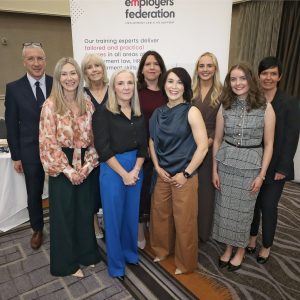
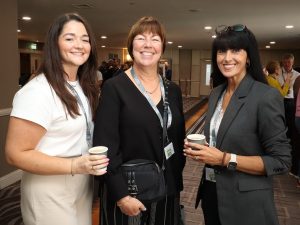
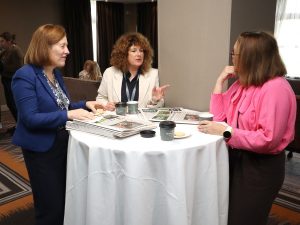
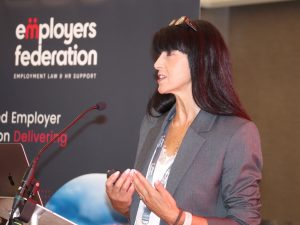
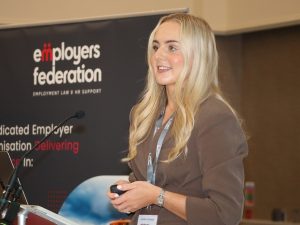
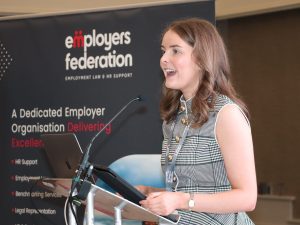
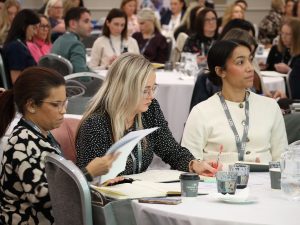
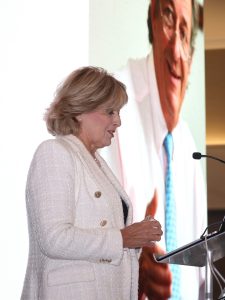
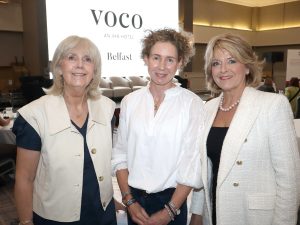
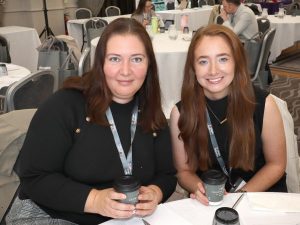
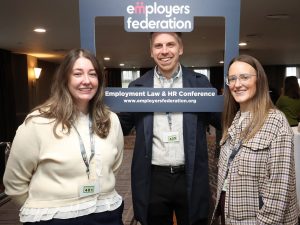
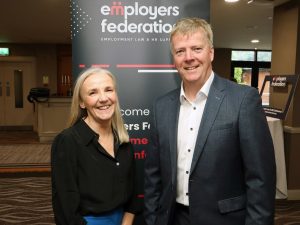
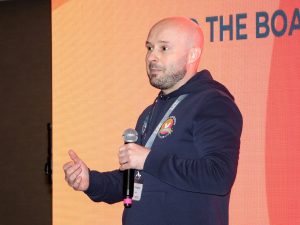
We have included a small selection of photos that captured the day.