ROI Newsletter February & March 2023
LEGISLATION UPDATE
Referendum on Gender Equality in Irish Constitution announced.
On 8 March 2023, to coincide with International Womans Day, Taoiseach Leo Varadkar announced that there will be a referendum on whether the Irish Constitution should be amended to remove ‘outmoded’ references to ‘women in the home’ with a view to enshrining ‘gender equality.’
Mr Varadkar stated that “For too long, women and girls have carried a disproportionate share of caring responsibilities, been discriminated against at home and in the workplace, objectified or lived in fear of domestic or gender-based violence.”
The referendum was called for by the Citizens’ Assembly on Gender Equality and also the Special Joint Oireachtas Committee on Gender Equality.
The Citizens’ Assembly recommended that Article 40 be amended to refer explicitly to gender equality and non-discrimination.
It also called for Article 41 to reflect that it protects family life “with the protection afforded to the family not limited to the marital family”.
Article 41.2 in the Constitution references that mothers should not, “by economic necessity, be forced to work to the neglect of their duties in the home.” Nearly 95% of the Citizens Assembly members voted for the removal of the reference to women’s work in the home.
Members said it should be replaced with language that is not gender-specific and obliges the State to take reasonable measures to support care within the home and wider community.
The Equality Minister, Roderic O‘Gorman, intends to publish the general scheme of one or more referendum bills by the end of June 2023. The referendum is widely anticipated to be held in November 2023 and will be a key milestone in the pursuit of gender equality, not only in Ireland, but across the world.
Work Life Balance and Miscellaneous Provisions Bill 2022
We have been regularly updating members on the introduction of the Work Life Balance and Miscellaneous Provisions Bill 2022 as it makes its way through the Irish Parliament. Members will be aware that the Bill was widely anticipated to have been introduced in the Autumn of 2022, however further amendments as it made its way through the Seanad have delayed its implementation.
On 1st March 2023 the Bill passed the final stages in the Seanad. The next, and final, stage of the legislative process, which we expect to be imminent, will see the Bill being enacted into law.
We will update members when this happens, setting out a detailed breakdown of the Act and the changes that will be introduced.
EU Directive on Minimum Wage
Whilst this EU Directive must be implemented on or before 4 October 2024 it is worth highling this at this juncture given how significantly it will change the collective bargaining landscape in Ireland. The Directive’s purpose is to reduce working poverty and inequality by focusing on improving the adequacy of statutory minimum wages as well as the promotion of collective bargaining.
The minimum wage aspects of the Directive will not impact greatly but the collective bargaining provisions will. Currently in Ireland, unlike the UK, there is no legal right for a trade union to force an Organisation to bargain in the workplace. This will change when this Directive is implemented as it explicitly promotes collective bargaining, recognising that strong and inclusive collective bargaining systems play an important role in ensuring adequate minimum wage protection. The Directive provides that member states with collective bargaining coverage rates of less than 80% must provide a framework of enabling conditions and establish an action plan (reviewed at least every five years) for promoting collective bargaining. As Ireland collective bargaining coverage rates are less than 80% they will have to provide such a framework.
A high level working group of the social partners was established in early 2021 year (Labour Employer Economic Forum (LEEF)) to review collective bargaining and the industrial relations landscape in Ireland. LEEF produced their report Reports of the LEEF High Level Group on Collective Bargaining in late 2022 which made recommendations including requirement to consult in good faith and a right to bargain. These recommendations may form the platform upon which ROI will be able to comply with this EU Directive. We will keep you updated on developments in this area.
CASE LAW
1. AER LINGUS SOCIAL ATHLETIC ASSOCIATION v MARY GAVIN
LABOUR COURT
Age discrimination/mandatory retirement age/objective justification
Facts
This was an appeal to the Labour Court against a finding of the WRC that the employee had been discriminated against on grounds of her age by the employers decision to terminate her employment after she had attained the age of 65.
The complainant reached the normal retirement age of 65, as set out in the Respondents employee handbook, in March 2019. She requested to remain in work and the Respondent agreed to that request, placing the complainant on a one-year fixed term contract. This was subsequently extended for a further year at the complainant’s request.
In January 2021 the complainant requested for a further occasion for her contract to be extended and the respondent rejected this request. The complainants employment subsequently came to an end on the basis that it was not renewed. The respondent relied on the age demographic of the workforce where the complainant worked and for succession planning it was necessary to implement its mandatory retirement age.
The complainant alleged that the respondent was not consistent in its application of its mandatory retirement age and as such her dismissal was discriminatory, contrary to the employment equality acts. The complainant also alleged that the respondent had not complied with the WRC Code of Practice, whereby , employers are required to have an objective justification for mandatory retirement ages.
Decision
The Labour Court dismissed the Respondent’s appeal and upheld the determination of the Adjudication Office (AO) that the complainant had been dismissed on grounds of her age and that such a dismissal could not be objectively justified.
The Labour Court found that the Respondent’s justification defence was undermined by ‘evidence of inconsistent application’ and ‘ by the absence of any evidence that the means of achieving any such aim is appropriate and necessary’
The Labour Court also highlighted the importance of a mandatory retirement age being identified in employee contracts rather than any other documentation which did not have contractual effect.
The complainant was awarded €30,000 as compensation by the Labour Court, which was deemed to be ‘an appropriately significant level’ having regard to the effect of the dismissal had on her.
Learnings
This decision is a reminder to employers that even where you have a mandatory retirement age, you must ensure that (1) this mandatory age had contractual effect and (2) you can objectively demonstrate that your mandatory age is a proportionate means to a legislate aim. If you do not consistently apply that policy, it undermines the ability to rely on the defence of objective justification. The case also represents a continuing trend of the Courts to scrutinise employer’s arguments and perhaps higher the hurdle for objective justification to be proven compared to the position 5 years ago.
2. Thomas Conway v Quick Training ADJ-00037379
Disability Discrimination/Religious discrimination
Facts
The complainant had registered with the respondent to complete a ‘safe pass’ training course. The complainant was not permitted to complete a ‘safe pass’ training course on grounds that he would not wear a mask/face covering.
The complainant stated that he had a disability (claustrophobia) and that the decision not to let him complete the training and to remove him from the workplace amounted to discrimination. The complainant did not provide any medical evidence to the regarding any disability nor had he visited his General Practitioner in approximately 20 years.
The complainant also alleged that he held a belief which meant he should not have to wear a mask.
The Respondent asserted that once the complainant identified that he had an underlying condition (despite no further evidence or information being provided in relation to it) they moved the complainant to another part of the room for better air flow. After this however the complainant became disruptive to the extent that he was removed from the course by the Guardia Siochana on grounds of public health and safety concern.
Findings
The WRC did not uphold the complainant’s allegation that he had been discriminated on grounds of his religious belief by the requirement to wear a mask or being removed from the training course as a result of this. The complainant had provided no evidence of any ‘belief’ that he should not have to wear a mask which amounted to a religious belief.
In respect of the complainant’s complaints of disability discrimination, the Adjudication Officer (AO) was satisfied that, despite not having attended his General practitioner in over 20 years regarding his claustrophobia, it amounted to a disability within the meaning of the legislation. The AO however found that ‘ the complainant has not established that the respondents safety concerns amount to less favourable treatment connected with a discriminatory ground’ .
The Respondent permitted the complainant to remain in the course, despite not wearing a mask, because of his alleged disability. The reason for the complainant’s removal for the course, to which he received a full refund, was not connected to his disability but rather as a result of his disruptive behaviour after the respondent moved in to an area rea of better air flow. Such action was justified by the Respondent.
Learnings
This case is a reminder that there is a legal obligation to put in place reasonable accommodations, such as allowing a person to not wear a face mask or covering, in the workplace when they have a disability. It also re-emphasises the low bar in ROI as to what conditions could constitute a disability. However, Respondents are not required to put in place accommodations which are not reasonable either for reasons connected to an individual’s disability or for any other reason.
TRAINING & DEVELOPMENT
We want to remind members of our free webinar taking place on Tuesday 14th March 2023, 12pm-1pm, on the Comparison of Employment laws in NI and ROI.
This one hour, live, webinar will highlight the key areas of difference between the jurisdictions and will be of benefit to HR professionals who advise on employment law and HR issues in both ROI and NI.
To register, please contact john@eefni.org providing your name and email address.
We are also running the following events from April – June 2023:
- Wednesday 19th April 2023 on ‘Conducting Investigation and Disciplinary Procedures in ROI’.
- Tuesday 10th May 2023 we are also hosting a free hour webinar on ‘Understanding the Practical Complexities of the ROI Bullying Code’
- Wednesday 14th June 2023– half day online course on ‘Handling Complaints of Bullying and Harassment in ROI’
A copy of our training and events brochure is attached for ease of reference.
If you want to book on any course please contact info@eefni.org
Event Brochure 2023
Our event brochure for the first half of 2023 can be downloaded here.
Our programme covers a variety of key employment topics with courses designed for HR professionals and also the managers who deal with employment relations issues.
Early booking is recommended to secure a place.
Updated Suite of Member Documentation
We are pleased to confirm that a number our key employment law policies for Republic of Ireland have now been uploaded onto the Members area on our website. These can be found in ROI guidance and are available to download in word format.
We intend to expand on this suite of documents within the forthcoming months and once the Work Life Balance Bill is finalised (see below).
If you do not currently have access to our members area or cannot access the ROI resources, please contact info@eefni.org
LEGISLATION UPDATE
European Union (Transparent and Predictable Working Conditions) Regulations 2022
The European Union (Transparent and Predictable Working Conditions) Regulations 2022 came into effect on 16th December 2022 and despite the significant changes brought in by the Regulations their introduction went through practically unnoticed.
The Regulations transpose EU Directive 2019/1152 of the European Parliament and of the Council of 20 June 2019 on Transparent and Predictable Working Conditions in the European Union and impact upon several pieces of employment legislation, including:
· Terms of Employment (Information) Act 1994
· Organisation of Working Time Act 1997
· Protection of Employees (Fixed-Term Work) Act 2003
· Workplace Relations Act 2015
A copy of the regulations can be found here
A summary of the main changes are as follows:
Amendments to the Terms of Employment (Information) Act 1994
Amendment to the statement of terms of employment
The Employment (Miscellaneous Provisions) Act 2018 introduced the right to a day five statement of five core pieces of information.
The “Day 5” statement has been amended to now include additional information relating to:
- The duration and conditions relating to a probationary period, if applicable.
In addition to this, several items that were previously part of the written statement to be provided within two months must now be provided as part of the “Day 5” statement:
- The place of work or, where there is no fixed or main place of work, a statement specifying that the employee is employed at various places or is free to determine his or her place of work or to work at various places.
- The title, grade, nature, or category of work for which the employee is employed or a brief description of the work.
- The date of commencement of contract of employment.
- Any terms and conditions relating to hours of work (including overtime).
Separately, all other terms of employment required to be given to the employee under the Terms of Employment (Information) Act 1994 are now required within one month.
This written statement must now include the following additional terms:
- The training, if any, to be provided by the employer (see below).
- In the case of a temporary contract of employment, the identity of the user undertakings i.e., the person or firm hiring the agency worker
- If the work pattern of the employee is entirely or mostly unpredictable, the principle that the work schedule is variable, the number of guaranteed paid hours and the remuneration for work performed in addition to those guaranteed hours, the reference hours, and days within which the employee may be required to work and the minimum notice period the employee is entitled to before the start of a work assignment.
- The identity of the social security institutions receiving the social insurance contributions attached to the contract of employment and any protection relating to social security provided by the employer.
The written statement to be provided to employees who are required to work outside the Member State must now also include:
- The country or countries in which the work outside the State is to be performed and its duration.
Maximum Duration of Probationary Period
With effect from 1 August 2022, in situations where an employee is subject to a probationary period at the commencement of employment, that period shall not exceed six months, except in limited circumstances as provided for in the regulations. In those limited exceptions the maximum period may be extended to no more than twelve months.
Mandatory Training
Where an employer is required by law or collective agreement to provide training to an employee to carry out the work for which they are employed, such training shall be provided to the employee free of cost and shall count as working time. Where possible, this training should take place during working hours.
Changes to the Organisation of Working Time Act 1997
Minimum Predictability of Work
Section 13 of the 2022 Regulations, which amend Section 17 of the Organisation of Working Time Act 1997 (OWTA) provide that:
- As well as the minimum notice period specified in the OWTA, a work assignment now must take place within the reference hours and days notified to the employee as part of their written terms.
- Where the notice of a work assignment provided to an employee is not within the minimum notice period of 24 hours or the work assignment is to take place outside the reference hours and days, the employee has the possibility to refuse the work assignment without adverse consequences.
Changes to the Protection of Employees (Fixed-Term Work) Act 2003
Probation Periods for Fixed-Term Workers
Where an employer engages a fixed-term employee on a probation periods, the probationary period must be proportionate to the length of the fixed term contacts- i.e. if the fixed term contact is for 1 year, it would not be proportionate to have a probationary period for the same duration.
Where a fixed-term contract is renewed for the same functions, the contract shall not be subject to a new probationary period.
We have updated our specimen day 5 statement and Statement of employment particulars to reflect the changes introduced by the Regulations. We recommend that members review their existing contractual documentation to ensure they are compliant with the changes
THE SICK LEAVE ACT 2022
As a reminder, the Sick Leave Act came into effect on 1st January 2023 providing for a statutory right to sick pay for eligible employees of 70% of their usual daily earnings up to a maximum of €110 a day for certified leave only.
For 2023, the entitlement is 3 days paid sick leave.
It is proposed to increase the entitlement to
- 5 days for 2024
- 7 days for 2025 and
- 10 days for 2026.
Employees must have completed 13 weeks’ continuous service with the employer before availing of statutory sick leave. The employee must provide their employer with a medical certificate from a registered medical practitioner and the certificate must state that the employee named is unfit to work due to their illness or injury.
The entitlement is triggered by the employee’s first statutory sick leave day. The leave must be in relation to a day or days when an employee would ordinarily work but is incapable of doing so due to illness or injury. The leave can be taken on consecutive or non-consecutive days.
We recommend you review your contractual documentation, including any sickness absence policy/procedure to ensure compliance with the legislative changes.
THE PROTECTED DISCLOSURES (AMENDMENT) ACT 2022
As a reminder to Members, the Protected Disclosers (amendment) Act 2022 commenced on 1st January 2022 and introduced several significant changes to the 2014 act which we have previously set out in our monthly newsletters.
The act, which also extends to workers, introduces a new obligation on certain ‘in scope’ employers to have a whistleblowing procedure as well as a ‘designated person’ to receive and investigate whistleblowing concerns . Those ‘in scope’ employers include:
- All public sector employers (public sector employers were already obliged to have a whistleblowing procedure, but that obligation is amended significantly);
- Any employer with 250 or more employees (from the date of commencement of the Act);
- Any employer with 50 or more employees (from 17 December 2023); and
- All employers who fall within the scope of certain EU law provisions referred to in the Directive (from the date of commencement of the Act). For example, this will apply to most employers in financial services.
Interpersonal grievances, defined as , ‘grievances about interpersonal conflicts between the reporting person and another worker, or a matter concerning a complaint by a reporting person to, or about, his or her employer which concerns the worker exclusively’, are expressly excluded from the act. This exclusion seeks to address the issues raised in the Supreme Court judgment in Baranya v Rosderra Meats [2021] IESC 77, where it was held that a complaint about health and safety issues affecting a single employee could constitute a protected disclosure.
Those dealing with, or investigation whistle bowling concerns in particular the designated person, are also required to have adequate training on the area of whistleblowing and how to manage concerns.
A copy of the amendment Act can be found here
WORK LIFE BALANCE BILL- UPDATE
We have been updating members on an ongoing basis on the introduction of the Work Life Balance and Miscellaneous Provisions Bill as it makes its way through the Irish Parliament
The bill, which had been widely expected to be introduced before the end of 2022, is currently before the Seanad Eireann, third stage.
The bill provides for the introduction of the right to request flexible working for caring purposes. This right is only available to parents of children under 12 years of age (16 years if disabled) or those caring for a dependant.
The Government recently announced amendments to the Bill just before the end of 2022 which included the introduction of medical care leave, domestic violence leave and the right to request remote working.
Medical care leave will provide for a maximum of 5 days paid leave in 12 months for the purposes of “significant care or support for a serious medical reason”
Domestic violence leave will see the introduction of up for 10 days leave to allow an affected employee to seek medical attention, seek help from victim services organisations, get counselling, relocate, get a court order, take advice, or seek assistance from the Gardaí.
The Government had previously produced a Draft Bill on the Right to Request Remote Working of Practice which received considerable negative feedback that it was without ‘bite’. The draft Bill has not advanced through the Oireachtas. The amendment to the Work Life Balance Bill will give the statutory right to request remote working only to employees who are providing significant care or support to another individual who resides with them.
To check the current status of the Bill, see here
CHANGES TO THE NATIONAL MINIMUM WAGE
From 01 January 2023, the National Minimum Wage increased to €11.30 per hour.
The National Minimum Wage applies to most employees. It is the minimum hourly pay rate that must be paid. It applies to full-time, part-time, temporary, casual employees and seasonal workers.
CASE LAW
There have been several recent cases considering the issue of pay and holidays, a few of which we have covered below.
Rhona Matthews v Morbury Ltd t/a Top Security
Facts
Ms Mathews complained that she never received any additional payment (or any of the other options available under the legislation) in respect of public holidays. The Complainant alleged that there was no economic benefit to an employee unless they worked the public holiday in question. Her complaint related to public holidays. She said that she ‘never got paid’ for public holidays.
The Respondent’s case was that a composite rate of pay was paid to employees, in line with the legislation and their employment contracts, in respect of public holidays.
Findings
Under s. 21 of the Organisation of Working Time Act 1997, employers have the discretion to decide which of the four options set out in the legislation to grant to an employee, in respect of a public holiday. Employees may receive any one of the following, in line with the legislation:
- A paid day off on the public holiday
- A paid day off within the month of the day of the public holiday
- An additional day of annual leave
- An additional day’s pay
Having carefully considered the legislation, the Adjudicating Officer (AO) found that those are the only four lawful options open to an employer in order to be compliant with the requirements of the Organisation of Working Time Act 1997.
In so finding the Adjudication Officer identified a legal distinction between the legislature’s approach to Sunday premium, which specifically allows for a composite rate to be paid and which was upheld in the High Court case of Trinity Leisure Holdings Limited T/A Trinity City Hotel v Sofia Kolesnik and Natalia Alfimova [2019] IEHC 654, and the legislature’s approach to public holidays which is silent in respect of a composite rate of pay.
In relation to Sunday Premium, s. 14(1) of the Organisation of Working Time Act 1997 provides that where an employee is required to work on a Sunday, and their having to work on that day is not otherwise considered in determining their pay, they shall be compensated by the following means and to such an extent as is reasonable having regard to all of the circumstances:
- an allowance
- an increase in the rate of pay
- paid time off in lieu or
- a combination of two or more of the above
By contrast, there is no such option available to an employer under the legislation with respect to public holidays. The AO therefore found that the legislation does not allow for that approach and the composite approach taken by company fell outside what is allowable under the relevant legislation and is not lawful.
Furthermore, the AO found that this was a very serious breach by the Respondent and could have made an award of up to 2 years pay. However, in the circumstances the sum of €600 was awarded to the complainant.
Comment
At the time of this claim there were nine public holidays set out in the Organisation of Working Time Act 1997 was as follows:
- New Year’s Day (1st January)
- St. Patrick’s Day (17th March)
- Easter Monday
- The first Monday in May
- The first Monday in June
- The first Monday in August
- The last Monday in October
- Christmas Day (25th December)
- St. Stephen’s Day (26th December)
This case confirms unlike Sunday premium, there is no legislative basis for the payment of a composite rate for public holidays. Employers must therefore ensure that workers are paid the appropriate rate where an individual is entitled to the holiday.
Waterford City and County Council v Robert Bible
Labour Court
Facts
This was a joint appeal by both the employee and employer following an earlier adjudication by the WRC in relation to the Organisation of Working Time Act 1997
Mr Bible, a firefighter who worked varying sets/shifts, alleged that Waterford city and county council had uncalculated his public holiday payments for the duration his employment.
He stated that his holiday pay was not based on normal weekly pay and various other payments/allowances, included shift premium and meal allowance and that he was underpaid for the public holidays that he was not rostered to work.
The employee relied on the provisions of the Directive and European case law whereby employees should receive ‘normal’ earnings when taking annual leave
The Respondent asserted that it had fully complied with its obligation under the Working Tim Act 1997 and the Organisation of Working Time (Determination of Pay for Holidays) Regulations 1997, and that the employee had received the appropriate rate of enhancement for public holidays in accordance with the legislation. The employer also argued that the matter had previously been dealt with in by the Labour Court in the case of DWT0895 and as such the matter was statute barred.
Decision
Annual leave and public holidays are dealt with differently in Republic of Ireland as compared to Northern Ireland. In ROI, workers are entitled to 4 weeks paid annual leave, emanating from the EU Working Time Directive. However, the entitlement to public holidays is separate and eligible employees (depending on their working hours) are entitled to:
- A paid day off on the public holiday
- An additional day of annual leave
- An additional day’s pay
- A paid day off within a month of the public holiday
The calculation of pay for public holidays is governed by the Organisation of Working Time (determination of pay) Regulations 1997
Regulation 5(2) of the regulations sets out the formula to be used when calculating the rate of a public holiday where the employee does not normally work that day.
It provides that, where the employee does normally work a public holiday, the rate paid for that public holiday she be ‘the sum that is equal to one fifth of the sum including any regular bonus or alliance the amount of which does not vary in relation to the work done by the employee but excluding any pay for overtime, paid in respect of the normal weekly hours last worked by the employee before that public holiday’.
In determining the payment for a public holiday, the Labour Court confirmed that the regulations expressly exclude any pay for overtime in the calculation of ‘an additional pay’ and as such the employees claim that overtime should be included is not well founded. . The Court also held that as the payment of shift premium and meal allowances varied week to week, dependent on the work done/shifts worked, they were also out of scope and were not well founded.
Comment
This is a welcome decision for employers and confirms that since the weekend allowances and night shift premia were only paid when the hours were worked, the did not need to be included in the calculation of public holiday pay for the purposes of the Pay for Holidays Regulations.
Alan Casey v Securitas Services Ireland
Facts
The complainant brought complaints of unlawful harassment on grounds of race contrary to the Employment Equality Act, 1998 arising out of an incident that occurred on 9th March 2021 with a fellow colleague.
During that incident the fellow colleague PB was verbally abusive to the complainant and told him to “go [expletive] yourself… he was only a traveller.”
PB was also alleged to have tried to incite the complainant to engage in a physical altercation.
The complainant alleged that the Respondent did not properly deal with the matter, that PB was not dismissed despite the incident amounting to gross misconduct and he was not properly supported during the investigation process which lasted a number of months.
Decision
The adjudication officer dismissed the complainant’s complaint on the basis that the Respondent was able to successfully rely on the defence as set out in s14A(2) of the Employment Equality Act whereby it can demonstrate it took such steps as were reasonably practicable to prevent the harassment from occurring. The AO referred to the case of McCamley v Dublin Bus[2016]27ERL81 in relation to the steps required to satisfy S14A(2) which included policies and procedures, union engagement, as well as a throughout investigation and appropriate action taken.
Comment
This case reenforces the importance of fit for purpose policies and procedures, adequate employee training and a thorough investigation when an employer wishes to rely on the statutory defence that it is not liable to the discriminatory acts of employees in the workplace. The AO accepted that it is ultimately ‘beyond the control if the employer to stop an employee using abusive, or in this case, discriminatory language. It is the requirement of the employer to take all ‘reasonably practicable steps’ to prevent harassment’.
We are running a half day course on 19th April 2023 on ‘Conducting Investigation and Disciplinary Procedures in ROI’.
On 10th May 2023 we are also hosting a free webinar on ‘Understanding the Practical Complexities of the ROI Bullying Code’
For more information on either of these courses, contact the Legal Team or info@eefni.org
Legislation
The Right to Request Remote Working
The Right to Request Remote Working Bill has been heavily criticised since its publication. In particular, there are many who believe it heavily favours employers as it gives broad discretion to refuse a request and includes a non-exhaustive list of 13 possible reasons. In addition, there is no recourse for employees if their request is refused.
The Government has recently announced that the right to request remote working will be introduced through the Work Life Balance Bill (rather than progressing the draft legislation published earlier this year), which includes a more general right to request flexible work for parents and carers. We reported on the Work Life Balance Bill in our September newsletter.
The Work Life Balance Bill is currently being debated by the Dáil. It is now expected that it will include a right for all employees to request remote working, but the right to request any other type of flexible working will remain limited to parents and carers. The proposed timeline of introducing the Bill before the end of 2022 seems optimistic, but we will keep Members updated.
New Bill on Hate Speech and Hate Crimes
The Criminal Justice (Incitement to Violence or Hatred and Hate Offences) Bill 2022 will repeal and replace the Prohibition on Incitement to Hatred Act 1989.
The aim of the Bill is to criminalise any intentional or reckless communication or behaviour likely to incite violence or hatred against a person/persons because they are associated with a protected characteristic. It has been drafted to ensure that it captures hate speech in an online context. The Bill proposes a term of imprisonment of up to 5 years for persons convicted of such an offence.
The protected characteristics under the Bill are much wider than under the existing Act and cover:
- Race;
- Colour;
- Nationality;
- Religion;
- National or Ethnic Origin;
- Descent;
- Gender;
- Sex Characteristics;
- Sexual Orientation; and
- Disability.
Under the Equality Acts employees are protected from less favourable treatment, harassment (including sexual harassment), and victimisation on equality grounds: gender; civil status; family status; sexual orientation; religion; age; disability; race; membership of the Traveller community. Many, but not all, of these equality grounds are also covered by the Bill.
The Department of Justice states that “Descent” is distinct from race and that it would be relevant, for example, in the context of the Jewish community, where a person may have Jewish ancestry but does not practice the religion.
In the employment context the Bill raises the possibility of an employee, who engages in certain forms of discriminatory/harassing behaviour potentially also committing a criminal offence if the nature of their conduct is likely to incite violence/hatred.
As Members will be aware, employers are vicariously liable for the acts of their employees carried out in the course of employment. The Bill provides that a “body corporate” will have a defence where it has reasonable and effective measures in place to prevent the communication generally of material inciting violence or hatred against a person/a group of persons on account of their protected characteristics and took all reasonable steps and exercised all due diligence to avoid the commission of the offence.
The Bill is a further reminder to employers of the importance of having effective and up to date equality and social media policies in place that are backed up by effective training.
Case law
Eamon Murphy v Michael Connolly & Sons Ltd SuperValu Supermarket
Facts: The Complainant was employed by the Respondent as a Store Manager. We had worked for the Respondent for approximately 15 years when he was dismissed after being seriously intoxicated at work.
The Complainant was an alcoholic. He had a number of alcoholic related issues culminating in a serious incident at work in December 2019. He was sent home, but he was declared fit and returned to work in January 2020. The Complainant undertook to attend at AA with no repeat of the alcoholic incidents. The Respondent was very sympathetic and did not take any disciplinary action on that occasion.
However, a further serious alcoholic incident took place at work in October 2020. The Complainant had been left in sole charge of the store that weekend when he brought in a considerable quantity of vodka and consumed it on the premises. The Complainant became completely unconscious and had to be assisted home by his colleagues. He immediately entered the Asiri residential alcoholic treatment programme and remained for a 28-day treatment programme.
At an investigation meeting the Complainant admitted he had been seriously intoxicated; however, he said the treatment programme had been successful and he was a “changed man.” The Complainant was invited to a disciplinary hearing following which he was dismissed. At this stage the Respondent was of the view that the breach of trust was incalculable. In making the decision to dismiss the decision maker had regard to 2 matters: the risk to a large business from an intoxicated manager; and the personal breach of trust that had arisen – the breach of trust was the crucial factor.
The Complainant alleged his dismissal meant he was refused a reasonable accommodation because he was an alcoholic.
Decision: Unlike the position in the UK, in Ireland alcoholism is a well-recognised disability.
The Adjudication Officer found the Complainant had been discriminatorily sacked because he was an alcoholic, and that in the absence of precedent in the area, it could not accept the breach of trust as a defence for discrimination. He also found the Respondent had failed to provide reasonable accommodation. The Adjudication Officer ordered €39,750 to be paid to the Complainant.
In reaching this Decision the Adjudication Officer agreed with the Complainant’s argument that the Respondent never held any realistic discussion with the Complainant about whether he could resume the duties of the Store Manager. In addition, no independent medical or addiction advice (including from the Asiri counselling/addiction service) was sought to review the Complainant and whether or not it was likely that his alcoholic incidents might re-occur.
Whilst the Respondent placed considerable emphasis on the “risk” factor his proposed return to work posed, the Adjudication Officer stated, “in the absence of Independent Medical/Addiction advice it has to be seen as simply speculation on the Respondent behalf.” (emphasis added.)
Finally, the WRC found that breach of trust is a matter for the Unfair Dismissal Act and that, unless and until tested in a Higher Court, breach of contract/breach of trust cannot stand as an effective employer defence in an Equality Discrimination Dismissal case.
Was an employer’s decision to increase sanction on appeal from a Final Written Warning to summary dismissal fair?
Facts: In Martin Browne v Egis Road and Tunnel Operation Ireland Limited the Complainant was employed as a Duty Manager in the Tunnel Control Room at the Dublin Port Tunnel. In his role he was responsible for overseeing the Control Room which monitors the maintenance, safety and security of the tunnel.
During the evening shift an employee (not the Complainant) decided to play a “prank” on his colleague whereby he pretended there had been a serious incident in the tunnel that he would need to attend in his emergency vehicle. The other employee believed the call was genuine and, during rush hour traffic, drove at speed to attend the alleged incident.
Following an investigation the Complainant was invited to a disciplinary hearing. The disciplinary manager found that the Complainant had lost control of the Tunnel Control Room and was aware of the prank which placed the employee and other drivers in potential danger. However the disciplinary manager accepted the Complainant’s contention that had not been feeling well and issued him with a Final Written Warning and a two-week unpaid suspension from work. The Complainant was informed of his right of appeal and notified that an appeal could result in the disciplinary sanction being upheld, removed, reduced or increased.
The Complainant appealed and ultimately the appeals manager found that a Final Written Warning was not the appropriate sanction in all the circumstances. The Complainant was summarily dismissed for gross misconduct.
Decision: The WRC found the employer had conducted and fair and reasonable process and that the decision to dismiss the Complainant was reasonable and proportionate in light of his conduct. The Adjudicator found the Complainant had failed to stop this “prank” could have resulted in injury and even loss of life to employees of the Respondent and members of the public who were using the tunnel at that time.
The Complainant argued that he could not be dismissed and that a sanction could not be increased on appeal. He also argued that it was unfair for a sanction to be increased on appeal as it denied him the opportunity to appeal against the termination of his employment. However, at the Hearing it was not disputed that the Respondent’s Employee Handbook had been agreed with SIPTU and the WRC found that the Respondent had acted in accordance with the Employee Handbook and the outcome was in line with its provisions.
This case is highly unusual in that the decision to dismiss the Complainant was only made on appeal. Here the fact that there was provision within the disciplinary procedure for the possibility of an increased sanction on appeal, appears to have saved the fairness of the dismissal. As a rule, employers should act with extreme caution before increasing a sanction on appeal and ensure the express right has been reserved in the disciplinary procedure and clearly brought to the attention of the employee. Further, had this case been heard in Northern Ireland it is unlikely the dismissal would have been upheld as fair if the employee had not been advised of the potential outcome in the Step 1 invite.
ROI LEGISLATION UPDATE
Sick Leave Act 2022
We can confirm that the new Sick Leave Act 2022 will commence on 1 January 2023.
Other Legislation
The Government has published its Legislation Programme for the Autumn 2022 which contains 38 bills for priority publication. Priority legislation includes the following that will affect employment law and HR:
- Work-life Balance
- Automatic Enrolment Retirement Saving System Bill and the
- Right to Request Remote Work Bill.
The full programme is available here
Domestic Abuse Leave & The Work Life Balance and Miscellaneous Provisions Bill.
At our NI Conference last week, we discussed the Northern Ireland Domestic Abuse (Safe Leave) Act which provides employees and workers the right to up to 10 days paid safe leave each year to deal with issues arising from domestic abuse. Northern Ireland was the first jurisdiction it provides for such laws in UK and Ireland.
However, in ROI under the Work Life Balance and Miscellaneous Provisions Bill 2022, the Government has agreed to introduce paid leave for victims of domestic violence.
Once enacted, those who are suffering or at risk of domestic violence will be entitled to 5 days of paid leave per year. The Government will also put in place mechanisms to support employers in developing domestic violence workplace policies and to better support employees experiencing domestic violence.
In addition to measures on domestic violence, the Bill contains three key measures to support families and carers, namely:
- A right to request flexible working arrangements for caring purposes, for parents and carers
- A right to leave for medical care purposes, both for employees with children up to age 12 and carers
- Extension of the current entitlement to breastfeeding/lactation breaks from six months to two years
Increase in Minimum Wage
Leo Varadkar, Minister for Enterprise, Trade and Employment and The Tánaiste has received Government approval to accept the Low Pay Commission’s recommendation to increase the National Minimum Wage to €11.30 per hour from 1 January 2023.
CASE LAW UPDATE
WRC – Mohamed Saad v Maynooth University CA-00042552-001
Complaints of unlawful race and religious discrimination in relation to access employment.
Summary-In the context of an interview process, taken as a whole, a question asked of a candidate concerning international work experience did not raise an inference of race or religious discrimination
Facts
The Complainant is an Arab/African Black Muslim Egyptian, who was granted Irish citizenship in 2017 and had applied for the position of Assistant Professor/Lecturer in the Department of Experimental Physics. He attended an online interview and was not successful. He sought feedback about the reasons he was not successful, and the university provided same and after further exchange told him that they believe that they had sufficiently responded to his request.
Shortly before the first day of hearing the complainant made a further written submission which included the accusation that “I was asked by Prof Farrell (the chair of the interview board) a very sensitive and surprising question about the “difference between Egyptian students and teaching in Egypt in comparison to Irish students & teaching in Ireland”!!!” The Complainant alleged this shows a difference of treatment between him and the successful candidate and the second placed candidate.
In evidence, the interviewer (Professor Farrell) said he could not remember asking the question but did not deny he had asked it. The Professor’s evidence was that different countries have different methodologies, and the question would have been asked to explore this and that he would have asked other candidates similar questions, including the second ranked candidate who had worked in the USA.
During the hearing the University were able to provide detailed evidence about the marking system (supported by their notes) and scores awarded to the applicants and for the interviews. In addition, they were able to breakdown the marks allocated to the complainant, the successful applicant and the second placed applicant. Th WERC found that the University had explained the complainant ‘scored well in all three areas and why he was considered appointable but there were two other applicants who scored higher.
Findings
The WRC commented that in isolation the question could give an inference of a discriminatory outlook by the questioner. However, in the context of an interview process taken, as a whole, a question asked of a candidate concerning international work experience did not raise an inference of race or religious discrimination.
WRC also carefully considered all the evidence presented both in written submissions and in oral evidence at the hearings and found nothing in the interview process and marking that can give rise to an inference of discrimination on the grounds of race or religion.
Lessons
This is a reminder to those conducting interviews:
- Maintain good notes and factually document what was said and explaining the mark awarded
- Take care in questions (unscripted particularly) in the interview
- Be consistent in the questions asked of all applicants to be able to robustly respond to allegations of less favourable treatment/discrimination.
WRC – Manufacturing Supervisor v Pharmaceutical Company ADJ-00039952
Summary- There is no reason why a worker’s grievance cannot be investigated while negotiations as to severance are ongoing
This was a claim presented under Section 13 of the Industrial Relations Acts 1969 which allows for ‘a trade dispute’ to be referred to the Workplace Relations Commission Adjudication Officer.
Section 3 then allows an Adjudicator to “investigate” the trade dispute with a view to ultimately making a “recommendation” in relation to the matter. In effect, this provision allows any dispute between an employer and an employee to be referred to the Workplace Relation’s Commission for investigation. There is no comparable mechanism in Northern Ireland
Facts
The complainant alleged that the day-to-day duties of the off-line supervisors were fundamentally altered without any negotiations or agreement with the workers affected and then raised formal grievances. His complaint was that the employer sought to change his substantive role without his consent.
The complainant stated his grievance was “parked” on 2nd May 2019 as he was approached, and began negotiating, a severance package with the employer. Unfortunately, the employer withdrew the offer during the negations and the grievance process recommenced following a lengthy delay. In this regard, the complainant submitted that the employer engaged in a series of private, one-to-one, meetings on this matter, in the absence of representative. He also submitted that the withdrawal of the offer was unreasonable, given his length of service and good employment record.
The employer undertook an extensive investigation and found that the complainant’s contractual terms were not impacted and that the change in duties feel within the contractual provisions and were reasonable in the circumstances. While the employer did accept that some exploratory discussions took place, these were never formalised or committed to writing. The employer accepted that it did meet with the complainant on a one-to-one basis in respect of these discussions but submitted that these were not formal meetings that required the attendance of the complainant’s union representative.
Findings
WRC found that the dispute regarding the amendment of his work duties could be characterised as an evolution of his duties, one that is in keeping with the wider industrial developments.
It was common case that the exploratory meeting in relation to the same were held on a one-to-one basis, without an express right of representation. In this regard, I note that such talks were informal and purely exploratory in nature. As these discussions may lead to the termination of the Worker’s employment, the initial conversations should be conducted in a delicate and somewhat informal manner.
In relation to the grievance that was “parked” for a period of months while these negotiations were ongoing the WRC found that it does not stand to reason that the grievance investigation would be effectivity stalled whilst the same are ongoing particularly when discussions were only exploratory and informal. WRC found that there is no reason why the worker’s grievance could not be investigated whilst such negotiations were ongoing. Therefore, the WRC found in the workers favour regarding the “stalling” of the grievance procedure and recommended that the employer pay the worker the sum of €2,500 in settlement of this dispute.
Lessons
When deciding if to put a process on hold employers need to consider if the discussions are at an advanced stage and ensure that there is no unreasonable delay. One option is to have those discussions running alongside of any internal process and only pause if an agreement is at a formative stage. If there is no resolution, then should ensure that the internal process is recommenced.

We were delighted to have over 120 delegates attend our Employment Law & HR Conference on 21 September 2022 at the Crowne Plaza Hotel. We started the day with some fun interactive sketches drawn by the artist Nuff Inc and delegates had the opportunity to try out their batting skills with a game of table tennis.

We were joined by exhibitors from organisations relevant to the topics we were discussing:
The Labour Relations Agency; Women in Business; Autism NI; Cara Friend; The Rainbow Project – Northern Ireland; Institute Of Directors (IoD) Northern Ireland; Menopause Champions Stephanie Reid; Disability Action Northern Ireland; Employers For Childcare; PIPS Suicide Prevention Ireland Charity; Business in the Community Northern Ireland; Action Mental Health; Nexus – supporting victims of domestic abuse; Parenting NI.


There was such a definite, positive buzz and as Alan Lyons described us – we are a ‘community’ of good, decent people.



Our host for the event was Karen Moore, Senior Employment Lawyer who took us through the programme of topics which included:
Michelle McGinley, Director of Legal & Policy was first up covering Policy and Laws: What’s happening? She spoke about some interesting developments ahead, in particular the Domestic Abuse and Safe Leave Act 2022;
Next up we had Sara Plower, Employment Lawyer presenting the Case Law Review and the importance of having a Dignity at Work policy backed up by relevant training;
Business Psychologist, Alan Lyons of Kinch Lyons gave a powerful presentation on how to make your emotions your superpower;
We then had Kathryn O’Lone, Senior Employment Lawyer who delivered a Practical Approach to Creating a Trans Inclusive Workplace. A very thought-provoking session with great tips on staff training and policy reviews;

Jamie Cater Senior Policy Manager from our sister organisations MAKE UK was next up to talk about ESG (Environmental, Social, Governance) and the benefits of HR leading on ESG.
Tom Hadley, Business Consultant delivered a fact filled session on What do Global World of Work Developments Mean in Practice for NI Employers and Business Leaders:
“70% of young people would rather turn down a new job than work for an organisation that didn’t align with their values.”

Then we broke for lunch and enjoyed a sit-down meal and catching up with familiar faces who we had all really missed seeing in person over the last 2 years
After lunch we had an engaging panel session chaired by Michelle McGinley on some of the big issues affecting business – strikes and industrial action; recruitment crisis and what might we expect from the new Prime Minister. We had great responses from our panellists: Peter Bloch, Managing Director, Tom Hadley, Christine White, Head of Business Development Women in Business and Sinead Sharpe, HR Director, Staff line;
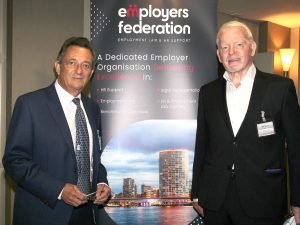
We followed this with Lorraine Toolan, Head of Training who covered the tricky issues of Handling Subject Access Requests and dealing with balancing the interests of personal information and confidentiality.

Lastly, we had a double presenter team – Tim Thomas, Solicitor and Alice Tranter, Senior Legal Associate on Business Travel and service provision in Europe
We held our raffle throughout the day and gave away prizes which peaked with the final voucher for Galgorm Resort & Spa voucher.
It was well and truly a great day enjoyed by all.




Reflecting its diverse and growing client-base, EEF Northern Ireland has rebranded to Employers Federation.
The organisation has been in existence for over 150 years and provides businesses with employment law advice and legal representation. Historically, the Employers Federation mainly consisted of manufacturing and engineering businesses. However, in the last 20 years its client-base has widened considerably and spans across a broad range of sectors and industries.
Announcing the rebrand, Peter Bloch, Managing Director of Employers Federation said: “The rebrand better reflects who we are, the businesses that we support and the significant growth that we have seen over the past number of years. Manufacturing and engineering remain core to our work, but as the NI business environment diversifies we have found ourselves doing the same.”
Employers Federation now supports businesses in a range of industries such as food, recruitment agency, technology, charities, Fintech and pharmaceutical.
Over the past year, Employers Federation has also extended its offer to support clients with operations in both NI and RoI. “We have pivoted our business in order to support our clients in the Republic of Ireland,” added Peter. “So much so, our newly relaunched website has a dedicated section on RoI and we now have lawyers who have obtained qualifications to better serve our clients.”
Michelle McGinley, Director of Legal & Policy said that the ethos of the organisation has not changed: “As a not-for-profit organisation, we pride ourselves on being accessible, reliable and affordable. We have retained our vision to provide a first-class service to all businesses regardless of their size, and at a cost that is affordable to them.”

“This is reflected in our straplines: ‘Employment Law and HR’ and ‘Behind Better Businesses’ – which recognise that the businesses we support are less likely to end up in an Industrial or Fair Employment Tribunal or, when faced with a legal claim, our clients are better placed to successfully defend legal claims.”
Employers Federation sees the rebrand and refocus as a necessary step to meet the increasing demand for employment advice both North and South of the border.

Legislation update
Sick Leave Act 2022
The Sick Leave Act 2022 was signed into law by the President on 20 July 2022. A commencement order is expected shortly to bring the Act into force.
Protected Disclosures (Amendment) Act 2022
The Protected Disclosures (Amendment) Act 2022 has also been signed into law and an order to commence the Act is also expected soon.
Case law update
Labour Court – The Agricultural Trust v Lynne Brien
Employer not liable for acts of sexual harassment where reasonable steps had been taken to prevent the acts occurring
The Complainant alleged she had been discriminated against on the grounds of gender and sexual orientation and was subject to sexual harassment in the course of her employment. She alleged the Respondent failed to carry out a proper enquiry into her complaint of sexual harassment and also failed to put appropriate measures in place to mitigate against the effects of that harassment.
She further alleged that she was victimised in the period between making her complaint of sexual harassment and that her resignation from employment was a constructive discriminatory dismissal.
The Complainant told the Court that her relationship with her colleague deteriorated following 2 incidents, one of which was where he told her that it was his mission to “turn her straight.” The Complainant also gave evidence that in 2018 she and a group of colleagues went to a nightclub after the employer’s summer party and that he pushed his body against her without her consent.
The matters were brought to the attention of the employer and an investigation was carried out. The male employee was suspended and following a disciplinary process, he was given a written warning. The Complainant was told that after his suspension ended, the male employee would work from home. The Complainant’s evidence was that she believed this would be on a permanent basis, however in October 2018 she was informed that he would be returning to the office. When the male employee returned the Complainant went on sick leave and resigned.
In not upholding the Complainant’s complaints, the Labour Court found that the employer was able to rely on the “statutory defence” that it had taken such steps as were reasonably practicable to prevent the acts of harassment occurring. The Court referred to the employer’s “comprehensive” Dignity at Work policy and the fact that both employees had received training in respect of this policy. The Court also found the employer had carried out a comprehensive investigation of the sexual harassment allegations and some of them were upheld. The Complainant had been offered access to the Employee Assistance Programme and the employer had undertaken to provide supervision and monitoring. The Court also noted the employer agreed to the Complaint’s request to move desks and had informed her that the male employee had committed to behaving in a professional manner towards her.
This case is a further example not only of the importance of comprehensive workplace policies backed up by training, but also that the investigation and outcome is not the end of the matter. Here the employer was able to demonstrate a responsible and considered approach to the working relationship going forward and put measures in place to help ensure there was no repetition of the conduct or any acts of victimisation.
WRC – Ann Doherty v St John of God Community Services
The employer’s refusal to allow a pregnant employee to work from home amounted to discrimination. Employee awarded €45,000
The Complainant’s case was that she was discriminated against on the grounds of family status in not being allowed work from home during the Covid-19 pandemic and in being moved role. She alleged she felt she was left with no option but to take sick leave during the pandemic as she stated she was not given the same options as other parents or as other pregnant women; this included reduced hours, the use of Zoom meetings; and working from home.
The Complainant also alleged that when she was due to return to work in August 2020 she was told she would be moving from a non-public facing role to a public-facing role even though she was 30 weeks pregnant at the time. The Respondent’s case was that day services closed as a result of the pandemic and staff were redeployed taking into account their personal circumstances.
In upholding the Complainant’s complaint of discrimination the Adjudication Officer stated he could not see any reason why she was not allowed to work from home when others had been facilitated in this way.
He noted “…What is striking is the absence of any documentation setting out the respondent’s thinking about why the complainant could not work from home…In the absence of any such document and any direct evidence as to this process, I am unable to fathom how the complainant’s situation was assessed, as compared to those colleagues who did not, for example, have childcare responsibilities and who were allowed to work from home. The complainant was not facilitated with working from home when those colleagues without childcare responsibilities or who were not pregnant were facilitated.”
In this case the employer was placed at a significant disadvantage in attempting to defend these allegations as it had no contemporaneous record of its considerations or the reasons for the decisions it made. As remote working is likely to be a permanent feature of working life going forward, employers should also ensure that clear polices and procedures are in place to manage remote work requests until the legal framework around remote requests in the Right to Request Remote Work Bill are finalised.
Sick Leave Act
As we reported in November 2021, Ireland is introducing a statutory entitlement to sick pay.
On 20 July 2022 the Sick Leave Act 2022 became law.
Under the Act employees will receive paid sick leave (70% of normal wages up to a maximum of €110 per day) for up to 3 days per year. This will increase as follows:
- 2022 – 3 days covered
- 2023 – 5 days covered
- 2024 – 7 days covered
- 2025 – 10 days covered
Employees Sick Pay entitlement starts once the law is commenced. This requires a Ministerial Order and is expected shortly.
WRC Annual Report 2021
On 1 July 2022 the Workplace Relations Commission (WRC) published its seventh annual report outlining the challenges faced by the WRC in 2021 and the ways in which it worked through the challenges that the global pandemic continued to present.
As Members will be aware, following the 2021 Supreme Court decision in Zalewski v. Adjudication Officer and WRC, Ireland and the Attorney General [2021] IESC 24 all proceedings before the WRC were paused for a period. This was to allow legislation to be enacted to bring the WRC in line with the requirements fixed by the Supreme Court. The Workplace Relations (Miscellaneous Provisions) Act 2021 was enacted on 22 July 2021 brought about some significant changes to the process followed in the WRC which now more closely reflects the process Members will be familiar with in the NI Employment Tribunal, specifically:
- proceedings before the WRC are now held in public;
- parties’ names now appear on the WRC list of upcoming hearings;
- WRC decisions are now published with the names of the parties included; and
- evidence in proceedings before the WRC should be given on oath.
Key aspects of the report include:
Conciliation, Advisory and Mediation Services
The WRC has traditionally relied on face-to- face interaction between the parties to mediation and conciliation. Whilst the pandemic resulted in a move towards online platforms, the report identified that technical difficulties, and variable broadband quality of some attendees, was an undesirable burden in the negotiation process. For these reasons the WRC has expressed its intention to return predominantly to face-to-face engagement.
Conciliation
According to the report the demand for conciliation services remained the same as it had been in 2020 (689 requests for conciliation services.)
Pay issues (44%) and organisational structures/hours of work and change in work practices (20%) made up over half of conciliation referrals. Industrial relations issues (24%) also consisted of a significant portion of referrals.
Inspection and Enforcement
In addition to its other services, the WRC conducts inspections to ensure employers are complying with their obligations under employment legislation. Inspections are generally carried out sectors where the risk of non-compliance has been identified or where previous non-compliance was detected.
Throughout 2020 4,432 cases were completed of which 61% were unannounced. 57 joint inspections were carried out with An Garda Síochána and other regulatory bodies.
Adjudication Services
Over the course of 2021 over 5,993 applications were made to the WRC which included 12,014 individual complaints.
The majority of specific complaints were in relation to pay (3,009) while complaints related to redundancy dropped to 571 compared to 3,894 the previous year.
1,596 complaints were received in relation to discrimination/equality/equal status, a marked increase compared to the previous year. Complaints on grounds of disability increased by almost 300%, and complaints on grounds of family status almost doubled. Race complaints now also account for a significant portion of referrals.
Hearings
A total of 3,320 adjudication hearings were held between 1 January – 31 December 2021; this compares to 1,899 hearings held in 2020. Of these hearings only 90 were conducted in person with the remainder conducted remotely.
The WRC received 2,216 postponement requests of which 1,421 (64%) were granted. Many of these related to requests arising from pre-booked holidays, witnesses’ unavailability, and long-term illness. The WRC plans to review the process in 2022 in conjunction with exploring the possibility of offering parties longer lead-in times to hearings.
IHREC Annual Report 2021
The Irish Human Rights and Equality Commission has also published its Annual Report 2021 which can be found at:
https://www.ihrec.ie/app/uploads/2022/07/IHREC_2021_AR_English_FA.pdf
Highlights of the report include:
The Commission received 1811 individual queries, compared to 1,732 in the previous year;
Disability discrimination remains highest area of public contact representing 46% of contacts related to services and 36% of contacts related to employment;
Of the public queries made to the Commission:
- The top three public concerns related to the Equal Status Acts, focused on discrimination on the grounds of disability (46%), housing assistance (16%) and race (13%). This reflects the findings in the WRC report, including that complaints on grounds of disability increased by almost 300%;
- The top three public concerns under the Employment Equality Acts focused on discrimination in employment and job seeking on the grounds of disability (34%), gender (25%) and the race ground (14%).
The Commission also concluded what it described as “an unprecedented” 33 Equality Reviews, including 31 with all local authorities in the country on the provision of Traveller Specific Accommodation.
Employment Permits
The Employment Permits system operates to enable highly skilled non-EEA nationals to fill roles in the labour market where demand cannot be met by the domestic labour force. On 20 June 2022, the Irish Government announced a suite of changes to the employment permits system to address skill and labour shortages across multiple sectors of the economy. The health sector has had several new roles added to the Critical Skills Occupations List in response to evidence of labour and skills shortages in the health service.
Additionally, previously imposed quotas on General Employment Permits for bricklayers, plasterers and other construction occupations have been removed. The quota of General Employment Permits for meat processing operatives has also been increased by 425.
These changes should provide some assistance to employers addressing labour and skills shortages in the relevant sectors of health, construction and agri-food.
Legislative developments
Parent’s Leave increase
Parent’s leave entitles each parent to a period of time off during the first 2 years of a child’s life, or in the case of adoption, within 2 years of the placement of the child with the family. Employers are not obliged to pay the employee during parent’s leave, but employees who qualify for Parent’s Benefit get €250 each week.
Changes to Parent’s leave from 1 July 2022:
- Parent’s leave increased from 5 weeks to 7 weeks for children born or adopted after 1 July 2022
- Employees can claim the additional 2 weeks’ parent’s leave if their child is under the age of 2 on 1 July 2022 or their adopted child has been placed with their family less than 2 years on 1 July 2022
- The extra leave must have been taken on or before the child’s 2nd birthday or within 2 years of the adoption placement
- Parent’s Benefit (where payable) increased from 5 weeks to 7 weeks for each parent
Parents of children born between November 2019 and July 2020 will not be eligible for the additional 2 weeks.
New rules on transparent and predictable working conditions
Ireland has until 2 August 2022 to transpose the European Union Transparent and Predictable Working Conditions Directive into national law.
One of the main changes being introduced via the Directive is a limit on the length of probationary periods at the beginning of a job.
Currently, employers are free to set any period of probation for new joiners; often probationary periods are set between 3 or 6 months, but can be up to 11 months to reflect the general rule that an employee does not have Unfair Dismissal rights until they have attained 1 years continuous service.
Under the Directive, EU member states are required to ensure that:
- probationary periods do not exceed 6 months;
- in the case of a fixed-term contract, the length of any probationary period shall be proportionate to the expected duration of the contract and the nature of the work;
- new probationary periods cannot be used where an employment contract is being renewed for the same function and tasks.
The Directive does provide that employers may, on an exceptional basis, provide for longer probationary periods where this is justified by the nature of the employment, or in the interest of the employee. Helpfully also, where the employee has been absent from work during the probationary period, employers may provide that the probationary period can be extended correspondingly, in relation to the duration of the absence.
Where employers will undoubtedly notice the greatest impact is in situations where an initial probationary period would normally be extended. In light of the requirements of the Directive, an extension beyond 6 months will now only be in exceptional circumstances.
Plans announced to replace current Minimum Wage with a new living wage
Proposals have been outlined to phase in a living wage over the next 4 years. Consultation with employer and worker representative groups, unions and the public on the draft plan will now take place.
The current proposals include:
- the living wage will be set at 60% of the median wage in any given year, which in 2022 would be €12.17 per hour. The national minimum wage is currently €10.50 per hour;
- the national minimum wage will remain in place until the 60% living wage is fully phased in, in 2026, but will increase over the years as usual, closing the gap between it and the living wage;
- from 2026 the living wage will be mandatory for all employers;
- depending on prevailing economic circumstances, it is proposed to give the Low Pay Commission discretion to introduce the full living wage faster or slower than the 4 years proposed.
Case law
Ní Cheallaigh v Donegal Travellers Project (Limited by Guarantee) (WRC)
A pay dispute arose between the Complainant and her employer that subsequently developed into a grievance concerning: pay; allegations of bullying and poor line management; failing to address the Complainant’s work concerns in accordance with agreed procedures; and failing to conduct a grievance in a timely manner. The Claimant ultimately resigned from her employment and brought a number of claims at the WRC.
The Adjudication Officer noted in their Decision that the case was unusual in nature. It was not contended by the Complainant that the pay issues, or the various issues that led to the grievance, were sufficient to justify her departure. The Complainant’s case was that the time the grievance process took, and how it was conducted, that made it reasonable for her to believe that her trust with her employer was irrevocably broken.
The WRC found the employer correctly applied its grievance policy when it appointed an external investigator to investigate the Complainant’s grievances. The Adjudication Officer stated this appointment could have been agreed with the Complainant, but that the failure to do so was not fatal. The issues for the Respondent arose when the appeal process took place. The Respondent was not required, under its policy, to offer an appeal, and it was noted this was most likely done in good faith to demonstrate a proper response to the Complainant’s concerns.
Unfortunately for the employer, the WRC found the appeals process to be “quite calamitous from a fair procedures point of view.” The Respondent appointed an appeals officer who had a working relationship with the manager against whom the grievance had been raised, but also his wife had been involved in a previous argument with the Complainant. It was found that, even if there was no bias, the perception of bias attached to the appeals officer meant it was inappropriate that he was appointed to decide the appeal. The Complainant requested that he be replaced, but no reason was provided to her why this was refused. The first time a different person was proposed was when the Complainant was sitting in the appeal hearing across from the appeals officer. The Adjudication Officer stated “It would have been difficult for her to agree in these affronting circumstances.”
The WRC found that the appeal process breached the Respondent’s grievance policy and rules of fair procedure. The flaws in the appeal process allowed the Complainant to form a reasonable belief that the appeal was not a genuine appeal process, that the Respondent wanted the grievance process to end, that her grievances were ultimately not important and consequently, that she was not valued in the workplace. The Adjudication Officer was satisfied that, given the conduct of the appeal, it was reasonable for the Complainant to terminate her employment.
The Complainant was found to have been unfairly dismissed and she was awarded 4 months loss of salary (€8960.00).
The interesting point in this case is that, had the employer not offered an appeal (which it was not obliged to do), the outcome likely would have been very different. However, once the employer took the decision to hold an appeal, it was obliged to conduct it in accordance with their grievance policy. This would have required the employer to again appoint an independent person as had occurred earlier in the process. The WRC noted “If the Respondent was unable to afford this, its grievance policy did not oblige it to conduct an appeal at all. However, what the Respondent was certainly not entitled to do was to decide to hold an appeal which then was manifestly unfair.”