On 26 November 2025, the Government has published the Minimum wage rates for 2026 of increases to the National Minimum Wage, including the National Living Wage. These will be effective from 6 April 2026. The Government accepted in full the recommendations of the independent Low Pay Commission (LPC).
| NMW rate from April 2026 | Increase (£) | Increase (%) | |
| National Living Wage (21 and over) | £12.71 | 50p | 4.1 |
| 18-20 Year Old Rate | £10.85 | 85p | 8.5 |
| 16-17 Year Old Rate | £8.00 | 45p | 6.0 |
| Apprentice Rate | £8.00 | 45p | 6.0 |
This marks yet another significant cost increase for employers, already struggling with rising wage bills. Earlier this year, employer NICs rose from 13.8% to 15%, and this has now been coupled with a sharp reduction in the earnings threshold at which NICs become payable — lowered from £9,100 per year to £5,000, a level fixed until April 2028.
On 27 November 2025 the Government confirmed a major change to its reform of employment rights. The plan to introduce a Day 1 right to claim unfair dismissal has been abandoned. Instead, the qualifying period in GB will be reduced from 2 years to 6 months – much to the relief of employers. See An update on the Employment Rights Bill.
This amendment is a significant shift in approach following debate of the Employment Rights Bill in the House of Lords.
Employers will welcome the clarity and change in approach. A new 6 month qualifying period removes the risk of potentially facing immediate unfair dismissal claims from new starters. This change also means employers can continue to manage probationary periods and short‑term contracts. However it is still a significant shift from the current 2 year qualifying period in GB. In Northern Ireland there are no current proposals to reduce the qualifying period from 1 year.
In its Press Release the Government also states ‘To further strengthen these protections, the Government has committed to ensure that the unfair dismissal qualifying period can only be varied by primary legislation and that the compensation cap will be lifted.’ Whether this means that the current cap on unfair dismissal compensation will be lifted remains to be clarified.
Employers will know that employees in both GB and NI will continue to have Day 1 protections against discrimination and discriminatory dismissals and those based on automatically unfair grounds for example for Whistleblowing.
It is possible now in GB that the reduced qualifying period for unfair dismissal rights could be introduced earlier than 2027.
It also keeps the Government’s timetable to introduce other changes to SSP in April 2026 in place.
New Statutory Rates from April 2026
- SMP, Maternity Allowance, SPP, Neonatal Care Pay, Shared Parental Pay, Parental Bereavement Pay, and Adoption Pay will rise to £194.32 per week;
- SSP will increase to £123.25 per week, alongside reforms making SSP a Day a right and removing the lower earnings threshold (changes applying in both GB and NI).
On 26 November 2025, the UK Government issued a Policy paper Working paper on options for reform of non-compete clauses in employment contracts inviting views on options to reform non‑compete clauses in employment contracts. These proposals are part of the wider mission to promote good jobs, boost productivity, and support a dynamic labour market.
Importantly, these proposals apply only in Great Britain (GB). There are no current plans under the Northern Ireland (NI) mandate to introduce similar reforms here. That said, NI often looks across at developments in GB, so future alignment could occur.
Case for Reform
The Paper states that non‑compete clauses restrict employees from joining competitors or starting their own businesses for a period of time after leaving a job. Their purposes is to allow business to protect legitimate business interests. However, evidence shows they can:
- Limit worker mobility
- Reduce knowledge sharing and innovation
- Deter start‑ups and growing businesses from accessing talent
- Create uncertainty for employees, even when clauses are unlikely to be enforceable
Surveys and research indicate that non‑compete clauses are common not only among high earners but also in lower‑paid roles.
Options under Consultation
There are four main policy options being considered:
- Statutory limit on length:
-
- A maximum duration (previously suggested at 3 months).
- Possible variation by company size (e.g., 3 months for large firms, 6 months for smaller firms).
- Complete ban
-
- Non‑compete clauses would be unenforceable in all employment contracts.
- Ban below a salary threshold:
-
- Clauses unenforceable for workers earning below a set salary level.
- Combination of statutory limit and salary threshold approach:
-
- Ban below a salary threshold, plus a statutory limit (e.g., 3 months) for those above it.
Enforcement
The government is consulting on reforms to non‑compete clauses in GB, with options including a statutory time limit, a complete ban, a ban below a salary threshold, or a combination of these approaches. Currently, restrictive covenants are enforced through the courts, where the losing party pays the winner’s costs, which often deters employees from challenging clauses even when they are unlikely to be enforceable. This means workers may comply with overly broad terms out of fear of litigation. The government is therefore also seeking views on whether high legal costs are a barrier to contesting non‑competes and what changes might help rebalance the system.
Consultation
The consultation is open until 18 February 2026, and we will continue to keep members updated on any developments.
This is the first of what we expect will be 26 consultations affecting employment rights in Great Britain. Meanwhile, in Northern Ireland, we understand that the Department for the Economy is finalising drafts of the Employment Rights Bill, which is expected to be published in January. It is also noteworthy that the Minister for the Economy is scheduled to attend the Economy Committee on 7 January 2026, which is perhaps the date on which she will introduce the Bill to them.
New GB Consultations and comparison with the position and/or proposals in Northern Ireland
On 23 October 2025, the GB government launched four consultations on how to give effect to new rights and duties that will form part of the GB Employment Rights Bill as part of their Make Work Pay plans.
These are:
- Make Work Pay: duty to inform workers of right to join a union
- Make Work Pay: trade union right of access
- Make Work Pay: enhanced dismissal protections for pregnant women and new mothers
- Make Work Pay: leave for bereavement including pregnancy loss
Each Consultation is summarised in more detail below which also summarises the position in Northern Ireland:
Consultation closes: 18 December 2025.
This new duty will be introduced under the Employment Rights Bill and will require employers to provide workers with a written statement informing them of their legal right to join a trade union. The duty is expected to take effect by October 2026.
Northern Ireland: Employers should note that there is a similar proposal contained in the Northern Ireland Good Jobs Bill and it will be interesting to see if the outworkings of this Consultation will shape how the duty will operate in Northern Ireland.
Key Areas of Focus
Form of the Statement: Government’s preference is for a standardised template that employers can issue with workplace-specific details.
Content of the Statement: The proposal is for the statement to include:
- A brief overview of trade union functions, such as representing workers and negotiating on pay, terms, and redundancies.
- A summary of statutory rights under Part 3 of the Trade Union and Labour Relations (Consolidation) Act 1992, including protection from detriment based on union membership.
- A list of trade unions recognised by the employer, if any, to help workers identify available representation.
- A link to a GOV.UK page listing current trade unions, especially useful for workplaces without formal recognition agreements.
This is perhaps more detailed than was expected and is more than a simple statement expressing a right to join a union.
Delivery Method: The proposal is to deliver the statement directly to new workers alongside their statement of employment particulars. However, the Consultation also seeks views on indirect methods.
Frequency of Reissue: The government proposes an annual re-issue of the statement to existing workers. If indirect methods are used (e.g., posters or intranet), annual reminders would still be required.
Again, we had expected that it would have been included in the written statement without any requirement to remind workers of it.
Consultation closes: 18 December 2025
This proposal is to give trade unions a legal right to access workplaces and communicate with workers both in person and digitally and again is expected to take effect in Great Britain by October 2026.
Northern Ireland: It is noteworthy that whilst Northern Ireland is also considering a legal general right of access the way the right will operate in Northern Ireland will differ to how it will work in Great Britain.
Currently, trade unions do not have a general right of access and must rely on voluntary agreements or individual members within a workplace.
The right to request access will be to:
- Meeting, supporting, representing, recruiting, or organising workers
- Facilitating collective bargaining
Access includes physical (on-site) or digital (e.g., via IT platforms or employer-facilitated distribution of materials).
The proposal is that an independent union will submit a formal notice of access to the employer. The employer may agree or object to the request.
If both parties agree, the terms are recorded with the Central Arbitration Committee (CAC) [the equivalent to the Industrial Court in Northern Ireland].
If no agreement is reached within a set timeframe, either party may refer the matter to the CAC. The CAC will assess whether access should be granted based on statutory criteria. It will also determine the terms of access and enforce agreements.
The Consultation is seeking employer views on:
- How unions should request access
- How employers should respond
- What factors the CAC should consider when granting access
- How fines for non-compliance should be determined
- A statutory Code of Practice will be consulted on in spring to provide practical guidance for implementation.
Consultation is open until 15 January 2026.
The third Consultation is around making it unlawful to dismiss pregnant women, mothers on maternity leave, and mothers for at least six months after they return to work—except in very specific circumstances.
Northern Ireland: Currently Northern Ireland are not considering similar proposals here. Under the Good Jobs Bill, NI’s plans are to enhance protection from redundancy for pregnant employees and those taking family leave by extending the redundancy protection period to 18 months from date the child is born. This would align Northern Ireland to the current position in Great Britain.
The aim is to tackle ongoing pregnancy and maternity discrimination in the workplace. The Consultation is seeking views from employers and other stakeholders on how this new protection should work in practice.
Key areas under review include:
- What specific circumstances should still allow dismissal during the protected period?
- When the protections should begin and end (i.e. what the protected period should be)
- Whether other new parents (e.g. fathers, adoptive parents) should be covered
- How to ensure women are aware of their rights
- How to support businesses through the change
- How to avoid unintended consequences, such as hiring hesitancy
- Whether additional steps should be taken to tackle pregnancy and maternity-related disadvantage
Two main options are being considered:
- A stricter fairness test: Employers would need to meet a higher standard when dismissing someone in the protected group, even if a fair reason exists.
- Limiting or removing some fair dismissal reasons – For example, narrowing the ‘conduct’ ground to only cover serious misconduct, or removing ‘capability’ and ‘some other substantial reason’ as valid grounds.
4. Make Work Pay: leave for bereavement including pregnancy loss
Consultation is open until 15 January 2026.
In Great Britain the government aims to introduce a new day-one right to unpaid bereavement leave under the Employment Rights Bill, which includes leave for employees who experience the loss of a loved one or pregnancy loss before 24 weeks. The consultation seeks views on defining who should be eligible for this leave, including the types of relationships that qualify and the forms of pregnancy loss that should be covered. It also explores whether others affected by pregnancy loss—such as partners or intended parents—should be entitled to leave.
In addition to eligibility, the consultation covers practical aspects such as the duration of leave, when it can be taken, and how flexible the arrangements should be. It also considers notice and evidence requirements, including how much notice employees should give and whether employers should be allowed to request proof of bereavement. While the leave will be unpaid, employers are encouraged to go beyond the statutory minimum to support staff wellbeing and morale.
Northern Ireland: In Northern Ireland, from 6 April 2026, statutory parental bereavement leave and pay will be extended beyond those proposed in Great Britain. Under these changes, employees in Northern Ireland will have a day-one right to statutory parental bereavement pay following the stillbirth or death of a child, without needing to meet the usual 26-week employment threshold. In addition, miscarriage up to 24 weeks will also be recognised as a qualifying event for bereavement leave from the first day of employment.
These entitlements apply specifically to individuals who are gainfully employed in Northern Ireland and paying Class 1 National Insurance Contributions.
Conclusions
It’s important for businesses in Northern Ireland to understand that — apart from SSP — the proposals currently being consulted on in Great Britain do not apply in Northern Ireland.
There are some similarities in the areas being reviewed as part of the Make Work Pay and Northern Ireland Good Jobs Bill, key differences still remain.
We will continue to keep members updated on any changes. If you have any questions, please contact the Legal team.
In Great Britain, the Equality and Human Rights Commission (EHRC) has formally urged the UK Government to act swiftly in implementing its updated draft Code of Practice. The EHRC submitted its draft Code to the government on 4 September 2025, for approval and thereafter it must be laid before Parliament for a 40-day period before it comes into force.
In a letter dated 15 October 2025, the EHRC raised concerns that the current version of the Code is now legally outdated following the Supreme Court’s decision in For Women Scotland v Scottish Ministers [2025] UKSC 16.
The EHRC is calling on the Government to revoke the current Code immediately and lay the updated version before Parliament without delay. This would provide clarity for courts, tribunals, and organisations with legal responsibilities under equality legislation.
Following submission of the draft Code, the EHRC has withdrawn its interim guidance on the practical implications of the For Women Scotland ruling. The guidance, originally published in April and updated in June 2025, faced criticism for being rushed and lacking accuracy. In the absence of formal guidance, the EHRC advises employers and other duty-bearers to seek specialist legal advice on their obligations under the Equality Act 2010 and the Human Rights Act 1998.
The EHRC’s actions come shortly after a letter from the Commissioner for Human Rights at the Council of Europe, dated 3 October 2025, which expressed concern about the treatment of trans people in the UK. The Commissioner noted that the For Women Scotland judgment did not address human rights issues and warned that misinterpretations of the ruling could lead to widespread exclusion of trans individuals from public spaces. He emphasised the urgent need for clear, inclusive guidance to support stakeholders in upholding rights and minimising exclusion.
Northern Ireland’s Position
In Northern Ireland, the legal and policy landscape differs. The Equality Commission for Northern Ireland (ECNI) published its own roadmap in June 2025 and had initially planned to seek a High Court declaration on the applicability of For Women Scotland in Northern Ireland by end of September 2025. This is due to Northern Ireland’s unique legal protections under Article 2 of the Northern Ireland Protocol and the “no diminution” commitment.
As of 10 October 2025, ECNI confirmed it is currently reviewing consultation responses and will provide further updates in due course. In the meantime, ECNI has issued interim guidance, which employers in Northern Ireland are encouraged to consult.
What Employers Should Do
Employers across the UK should be aware of the evolving legal context and the potential implications for workplace policies and practices. In light of the uncertainty surrounding the current Code and its alignment with recent case law, organisations are advised to:
- Monitor developments from the EHRC and ECNI.
- Review internal policies to ensure they reflect current legal standards.
- Seek legal advice where necessary, particularly in relation to equality and human rights obligations.
- Ensure any guidance used is up to date and legally sound.
We will continue to keep members informed as further updates become available.
On 16 October 2025 the Economy Minister, Dr Caoimhe Archibald launched a three-year Skills Action Plan to help Northern Ireland develop the skilled workforce needed to support economic growth. The plan outlines how the Department for the Economy will work with businesses, education providers, and communities to improve access to training and ensure people have the skills to succeed in a changing economy.
What the Plan Aims to Do
The action plan focuses on three main areas:
- Working together with industry and education partners to develop better ways of delivering skills.
- Improving the current system by building on successful programmes and institutions.
- Creating an inclusive and forward-looking skills environment that helps people from all backgrounds reach their potential.
These efforts support the Minister’s broader Economic Vision, which aims to create more good jobs, promote regional balance, raise productivity, and reduce carbon emissions.
Why this matters to Employers
Although employment levels are high, many businesses are struggling to find workers with the right skills. The Skills Barometer shows there’s a shortage of skilled labour across all sectors. At the same time, new industries and technologies are driving demand for highly skilled workers, and economic inactivity remains a challenge.
To address this, the Department is investing in programmes like Skill Up and Step Up, expanding Apprenticeships, and developing a new Careers Portal. The expansion of Ulster University’s Magee campus to 10,000 students is also expected to boost skills and drive growth in the North-West.
Next Steps: Reform and Collaboration
The next phase of the plan focuses on reforming how skills are developed and delivered. A sector-based approach will be used to better support the needs of different industries, building on successful models like the Digital Skills and Green Skills Action Plans.
The Skills Council will continue to play a key role in connecting stakeholders and reducing fragmentation in the system. Its sub-groups will be reviewed to ensure they reflect the needs of employers and communities.
The Department will also work with Invest NI to improve how skills provision is communicated and aligned with economic priorities. Efforts will be made to support Irish Medium learners and ensure fair access to qualifications.
Funding and Accountability
Delivering the plan depends on securing funding. The upcoming Westminster Spending Review and proposed multi-year budget will be critical. The Department will also continue to explore alternative funding sources, such as PeacePlus, the Shared Island Fund, and Investment Zones.
Progress will be tracked through regular reporting, with a formal update due by September 2026. A new evaluation strategy will help measure the impact of skills programmes and ensure they support the goals of the Skills Strategy.
Looking Ahead
There is optimism across government and industry about the potential of this Skills Action Plan to deliver meaningful change. However, many of its goals are based on long-term achievements that will take time to realise. Success will depend not only on sustained investment and collaboration, but also on the ability to adapt to changing economic conditions and workforce needs. Employers, educators, and policymakers will need to remain engaged and responsive as the plan unfolds.
The Department for Communities has published its Response To The Public Consultation on Gender Pay Gap Information Regulations. This consultation ran from November 2024 to February 2025 and gathered views on how gender pay gap reporting should work in Northern Ireland.
There were a total of 15 questions and the key areas covered in the consultation. In summary:
- Who must report: All employers across all sectors (public, private, and voluntary sectors) who are above the threshold must report – however disappointingly the Department has yet to decide the threshold. This is likely to be either 250 (in line with UK) or 100 in line with the Pay Transparency Directive
- How to calculate pay gaps: Department has decided that ONS definition of pay and the standard methodology (currently uses gross median hourly earnings excluding overtime when calculating the Gender Pay and it is recognised as the standardised methodology used in UK should be adopted.
- How often to report: Employers will be required to report annually.
- Where and how to publish: Employers will be required to publish the report on their website and the Department will also explore having central location to report as in the UK.
- Action plans: Employers will be required to publish plans to address any pay gaps.
- Ethnicity and Disability: I The Department does not believe ethnicity and disability pay gap reporting can be enforced under current Gender Pay Gap Regulations, as employers are not legally required to collect this data and disclosure is voluntary. For now, reporting on these areas will not be required, but the Department will monitor progress on the UK Equality Bill before making further decisions.
- Responsibility: Consensus is that Equality Commission Northern Ireland’s existing role in equality and fair employment makes it well positioned and should take on this responsibility.
- Compliance: Department is still considering the appropriate sanctions and may focus first on encouraging compliance, with penalties scaled based on the size of the organisation.
The Department received 45 responses (41 of which were viable) and has used this feedback to shape its final policy proposals.
When: The Department aims to introduce the Regulations to give effect to Gender Pay Gap reporting as soon as possible after the Good Jobs Employments Rights Bill receives Royal Assent.
This is not likely to happen until 2027 and therefore the first reports will be in 2028.
Interesting The Department is carefully considering how the EU Pay Transparency Directive may influence future changes. The Pay Transparency Directive requires businesses over 100 workers to report on their Gender Pay Gap information.
Whilst it is still unclear how the Pay Transparency Directive will apply in Northern Ireland. Both the Equality Commission and the Human Rights Commission for Northern Ireland believe that, under the Windsor Framework’s dynamic alignment, most obligations under Pay Transparency Directive should be adopted and implemented.
Summary of Responses to the Questions
Q 1 – Do you agree that the threshold of 250 employees is also appropriate for Northern Ireland? If not, what do you think is an appropriate threshold?
A threshold of 250 employees is used in England, Scotland, and Wales.
38% of respondents agreed that 250 employees is the right threshold.
Others felt it was too high, noting that only 0.4% of employers in Northern Ireland have more than 250 staff.
However, those larger employers account for over half of all employees in Northern Ireland. Lowering the threshold to 100 employees would include nearly 10% more workers.
The Information Commissioner’s Office supported having a clear threshold to protect employee privacy and ensure compliance with data protection laws.
As stated above the Department is considering the potential impact of the EU Pay Transparency Directive which applies to EU Member States. The EU Pay Transparency Directive to report for companies with 100+ employees but allows smaller employers to report voluntarily.
The Department is still considering the best threshold and will factor in developments from the EU Directive. The final regulations will be introduced after the Good Jobs Employment Rights Bill becomes law.
Q 2. Do you agree with this aspect of the legislation, i.e. the scope should include all sectors?
94% of respondents agreed that all sectors (public, private, and voluntary) should be included. Although Northern Ireland has the lowest gender pay gap in the UK, the Department believes there are still differences that need to be addressed:
The Department agrees that all sectors should be included in the Regulations
Q 3 Do you agree that this methodology should be used?
The UK currently uses gross median hourly pay (excluding overtime) as the standard method. 74% of respondents agreed, saying it would help ensure consistency and allow comparisons across the UK.
The Department agrees that using a standardised method is important to keep reporting clear and consistent with the rest of the UK.
Q 4 Do you agree that we use the Office for National Statistics (ONS) definition of calculating ‘pay’?
81% of respondents agreed, saying it would help keep data consistent across the UK.
The Department agrees that using the ONS definition is the right approach. It ensures consistency and comparability with UK data. The final Regulations will clearly explain what types of pay must be included—and what should be excluded—when calculating gender and bonus pay gaps.
Q 5 Do you agree with the proposal to use mean and median figures?
The Department agreed that the standard method used by ONS to calculate mean and median gender pay gaps should be adopted. 83% of respondents agreed, saying it would help ensure consistency and allow comparisons across the UK.
Employers should expect to use this method when reporting gender pay gaps.
Q6 For employers that will be within the scope of these Regulations, can you currently calculate Gender Pay Gap figures from your systems?
73% said yes.
Q 7 – Do you agree with the proposal to use the specified snapshot date when calculating gender pay information?
The Department asked whether a fixed snapshot date—5 April—should be used to calculate gender pay gap figures. 25 respondents agreed, while 13 disagreed.
Some disagreed due to concerns about Easter holidays affecting pay patterns, or that a single date doesn’t reflect seasonal or part-time work, especially for women.
Many suggested using average earnings over a longer period, such as three months.
A few supported the UK approach, which uses two snapshot dates:
- 31 March for most public sector employers
- 5 April for private, voluntary, and other public sector employers
In Ireland, employers choose a snapshot date in June, and report based on the previous 12 months. The Department now supports using two snapshot dates, in line with the rest of the UK. This will help ensure consistency and allow for direct comparisons between Northern Ireland and other UK regions.
Q 8 – Do you think the Regulations should specify where the employer publishes their Gender Pay Gap information?
Many suggested publishing the data on both the employer’s website and a central Government website. The key message was that the information should be easy to find, transparent, and consistent.
- In the UK, employers publish gender pay gap data on a central Government website.
- In Ireland, employers publish it on their own website or in another accessible way and must keep it available for 3 years.
The Department has decided that employers will be required to publish gender pay gap data on their own website (if they have one). The Department is also exploring the option of a central Government website for annual reporting, similar to the rest of the UK.
Q 9: Do you agree that the publication of Gender Pay Gap information will encourage employers to take action to close the Gender Pay Gap?
78% of respondents agreed it would help drive action. The Department agrees that publishing the data is important but believes employers should also create action plans to help close the gap.
Q 10: Do you agree that employers should publish this information on an annual basis?
The Department confirms that annual reporting will be required in Northern Ireland.
Q 11 – Do you have any comments on providing Gender Pay Gap information relating to a workers (a) ethnicity and / or (b) disability?
Most responses supported the idea in principle. However, several concerns were raised:
- No agreed definitions or standard methods for measuring ethnicity and disability pay gaps
- Employees may be reluctant to disclose this information
- Risk of identifying individuals, especially in small teams
- GDPR and privacy concerns
- Data may be unreliable or incomplete
- Employers would need clear legal guidance to collect and report this data
Currently, UK and Ireland do not require employers to report ethnicity or disability pay gaps. The UK Government is considering introducing this through the upcoming Equality (Race and Disability) Bill, which may apply to employers with over 250 employees.
Department supports the idea but does not believe it can be enforced under current Gender Pay Gap Regulations. Employers are not legally required to collect ethnicity or disability data, and employees can choose not to disclose it. The Department will monitor developments in the UK Equality Bill before making further decisions. This means that ethnicity and disability reporting will not be required initially.
Q 12 – Do you agree that employers should produce and publish action plans?
In the UK, action plans are not currently mandatory, but the Government is considering introducing them.
In Ireland, employers must publish a statement explaining their gender pay gap and what steps they’re taking to reduce it.
The Department has decided that employers will be required to produce and publish action plans. The Department will provide guidance on:
- What to include in the plan
- How often it should be updated
- Where it should be published
- Who it should be shared with
Q 13 – In your opinion, which body / organisation should be responsible for monitoring and enforcing the Gender Pay Gap?
Most respondents said the Equality Commission for Northern Ireland (ECNI) is the right body. In the UK, this role is handled by the Equality and Human Rights Commission (EHRC). In Ireland, enforcement powers are shared between the Irish Human Rights and Equality Commission (IHREC) and the Workplace Relations Commission.
The Department agrees that ECNI should take on this role in Northern Ireland. ECNI already monitors public sector equality duties and fair employment, making it well suited to oversee gender pay gap compliance.
Q 14 If you are an employer, what is your assessment of the costs to your business of conducting gender pay analysis and publishing the information?
As Gender Pay Gap Reporting will be a legal requirement for employers above the set threshold. Businesses must ensure their systems can produce the necessary data.
Q 15. What sanctions, other than an offence, do you believe would be appropriate if an employer fails to comply with these Regulations?
Some felt no fines should be imposed and suggested the Equality Commission for Northern Ireland (ECNI)investigate non-compliance.
Others proposed:
- Fines, especially for larger organisations
- Public naming of non-compliant employers
- Support and guidance to help employers meet requirements
- Formal warnings and mandatory training for initial failures
- Stronger penalties for repeated or serious breaches, such as:
- Restrictions on public contracts or funding
- Possible action against directors
The Department is still considering the appropriate sanctions and may focus first on encouraging compliance, with penalties scaled based on the size of the organisation.
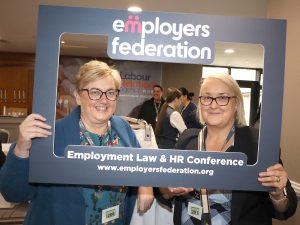
2025 Employment Law & HR Conference 2025: Supporting Employers in a time of Change
Our Annual Employment Law & HR Conference was held on 9 September 2025. This was a sold-out event where we were joined by employers from across all sectors in Northern Ireland.
Our Conference ethos is always to share knowledge and information in a practical an accessible way. Employers come away not only with valuable and relevant learnings, but also with the tools and understanding of how to put these into practice. We covered a wide variety of topics including legislative developments, case law, soft skills and much more.
The Minister for the Economy
We were delighted to be joined by the Minister for the Economy who opened the Conference with a short address on the Good Jobs Bill. The Minister discussed the importance for both employees and employers that good jobs are created in Northern Ireland. Her message was clear, good jobs are central to a thriving economy, and employers have a vital role to play.
We thanked the Minister before she headed off for the first day back in the Assembly following the summer recess.
Policy in Focus: The Good Jobs Bill
Michelle McGinley, Director of Legal & Policy, then guided delegates through the Department for the Economy’s Response to the Good Jobs Public Consultation and what the Department has decided to take forward. Michelle considered each of the four Themes:
- Theme A: Terms of Employment
- Theme B: Pay and Benefits
- Theme C: voice and Representation
- Theme D: Work-Life Balance
Whilst the Department has indicated the proposals it intends to take forward, some of the finer detail around how they will operate is yet to be decided. The proposal to take forward a general right for trade union access sparked lively and important conversations throughout the day.
Tackling Sexual Harassment
Sara Plower, Employment Lawyer, raised critical awareness around sexual harassment in the workplace, offering practical insights into how businesses can prevent incidents and respond effectively. The session was a timely reminder of the importance of proactive policies and a culture of respect.
Case Law review
Kathryn O’Lone, Senior Employment Lawyer, Head of ROI and Business Improvement, delivered two compelling reviews of recent case law. This included the impact of the Supreme Court judgment in For Women Scotland and the Court of Appeal ‘s nuanced decision in Higgs v Farmor, which explored how employers can balance competing views in the workplace.
Negotiation Strategies That Work
Enda Young, founder and CEO of the Centre for Negotiation and Leadership led a highly engaging and thought-provoking session on practical negotiation strategies for employers—a skill increasingly vital in today’s evolving workplace landscape.
Enda is running a course on negotiation at the Employers Federation office on 15 October 2025.
Diversity & Inclusion in Action
Judith Gillespie CBE, Co-Chair of the Diversity Mark Assessment Panel, and Christine White Director Diversity Mark explored the value of inclusive workplaces, highlighting why diversity and inclusion are more important than ever in building resilient, forward-thinking organisations and in retaining talent.
Panel Session
Karen Moore, Senior Lawyer, Head of Training (NI & ROI), hosted and organised the event, and also led a dynamic panel session reflecting on the morning’s discussions and the feedback from our digital polls. Enda Young and Christine White contributed to the panel; they were joined by Michael Neill, HR Manager: Industrial Relations, Musgrave, and Aileen Hoey, HR Director, Terex GB. The panel tackled key questions and offered fresh perspectives on issues including: positive working relationships between employers and trade unions; risk assessing the potential for sexual harassment in the workplace; and DEI.
Good Work Charter Preview
Elaine Clarke, Director of Employment Relations Services Labour Relations Agency, shared an overview of the proposed Good Work Charter, offering an insight into what’s ahead for employers and employees alike.
Energy, Engagement & a Touch of Golf
The atmosphere throughout the day was full of energy – lots of networking, meaningful engagement, and even a few spot prizes and a touch of golf-themed fun to keep spirits high.
Thank You to Our Exhibitors & all Attendees
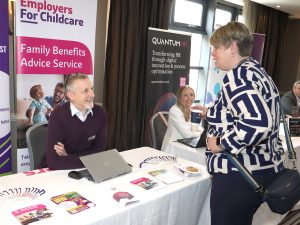
A heartfelt thank you to our exhibitors: Autism NI, NOW Group, The Labour Relations Agency, Employers For Childcare, Include Youth, and Quantum HR™—your presence added real value to the day.
And finally, to all the employers who joined us: your continued engagement means the world.
It’s a privilege to support you, and we never take your support for granted.

















ZHC-paper-for-NI-Employers-Federation
As part of “voice and representation” under the Good Jobs Employment Rights Bill, the Department for the Economy is proposing to strengthen the role of trade unions.
To do this the Department plans to introduce a new right of trade union access to workplaces. This new proposed right of access will apply to all workplaces whether a trade union is currently recognised or not.
Right of Access in New Zealand
Under New Zealand’s Employment Relations Act 2000 (Sections 19–25), trade union representatives have a legal right to access workplaces during working hours for a range of purposes including: supporting members with employment-related issues; promoting union membership; and ensuring compliance with employment legislation. This access is automatic when a collective agreement is in force or is being negotiated for the work done at that site. In other cases, union representatives must seek employer consent which cannot be unreasonably withheld. Employers are required to respond to access requests promptly—by the next working day—and if no response is given within 2 working days, consent is deemed to have been granted.
Even when consent is not required, union representatives must comply with specific conditions. They must enter at reasonable times, follow health, safety, and security procedures, and act in a manner that respects normal business operations. Upon arrival, they are expected to notify the employer of their presence, provide identification and the reason for their visit. If the employer cannot be located despite reasonable efforts, the representative must leave a written notice detailing their identity, union affiliation, time, date, and purpose of entry. These protocols are designed to balance union access with operational integrity and workplace safety.
There are limited circumstances under which access may be denied. These include: national security concerns; religious exemptions (supported by a certificate under Section 24); and situations where no employees are union members and the workforce is fewer than 20 people. Employers who deny access must provide written reasons, and penalties may apply for breaches of the access provisions. The legislation aims to ensure fair and reasonable access for unions while safeguarding employers’ rights to manage their premises and maintain operational continuity.
Your views
We are now seeking employers’ views on the Department’s plans.
Your views will help shape the operational details of how increased trade union access might work in practice if brought into law. The Department has stated that the right will come in (subject to Executive approval).
We are seeking your views on a number of areas, including:
- Preferred methods for unions to request access (written, verbal, or other)
- Appropriate points of contact within a business (owner, HR, etc.)
- Reasonable timeframes for acknowledging and arranging access (e.g. 5 working days vs. New Zealand’s 2-day standard)
- Scope of access—whether limited to common areas or negotiated case-by-case
- Digital access protocols, including employee consent and communication limits
- Grounds for denying access and whether these should be legislated
- Coordination of multiple union requests to avoid operational disruption
- Enforcement mechanisms, including potential penalties for non-compliance
It will be important that any new obligations placed on employers are proportionate, clearly defined, and sensitive to the realities of running a business. Your input will help ensure that any final legislation (if passed by the Executive) deals with the practical constraints faced by employers. If you have any comments, or if you are interested in helping us to respond to more detailed questions, please contact info@eefni.org