2025 Employment Law & HR Conference 2025: Supporting Employers in a time of Change
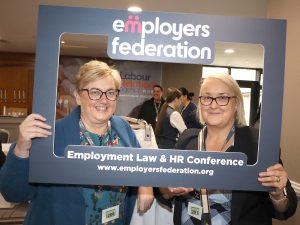
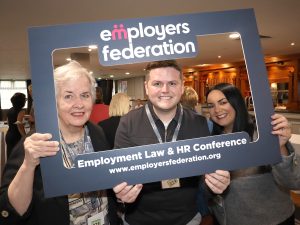
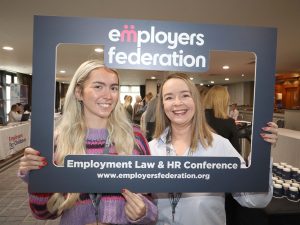
Our Annual Employment Law & HR Conference was held on 9 September 2025. This was a sold-out event where we were joined by employers from across all sectors in Northern Ireland.
Our Conference ethos is always to share knowledge and information in a practical an accessible way. Employers come away not only with valuable and relevant learnings, but also with the tools and understanding of how to put these into practice. We covered a wide variety of topics including legislative developments, case law, soft skills and much more.
The Minister for the Economy
We were delighted to be joined by the Minister for the Economy who opened the Conference with a short address on the Good Jobs Bill. The Minister discussed the importance for both employees and employers that good jobs are created in Northern Ireland. Her message was clear, good jobs are central to a thriving economy, and employers have a vital role to play.
We thanked the Minister before she headed off for the first day back in the Assembly following the summer recess.
Policy in Focus: The Good Jobs Bill
Michelle McGinley, Director of Legal & Policy, then guided delegates through the Department for the Economy’s Response to the Good Jobs Public Consultation and what the Department has decided to take forward. Michelle considered each of the four Themes:
- Theme A: Terms of Employment
- Theme B: Pay and Benefits
- Theme C: voice and Representation
- Theme D: Work-Life Balance
Whilst the Department has indicated the proposals it intends to take forward, some of the finer detail around how they will operate is yet to be decided. The proposal to take forward a general right for trade union access sparked lively and important conversations throughout the day.
Tackling Sexual Harassment
Sara Plower, Employment Lawyer, raised critical awareness around sexual harassment in the workplace, offering practical insights into how businesses can prevent incidents and respond effectively. The session was a timely reminder of the importance of proactive policies and a culture of respect.
Case Law review
Kathryn O’Lone, Senior Employment Lawyer, Head of ROI and Business Improvement, delivered two compelling reviews of recent case law. This included the impact of the Supreme Court judgment in For Women Scotland and the Court of Appeal ‘s nuanced decision in Higgs v Farmor, which explored how employers can balance competing views in the workplace.
Negotiation Strategies That Work
Enda Young, founder and CEO of the Centre for Negotiation and Leadership led a highly engaging and thought-provoking session on practical negotiation strategies for employers—a skill increasingly vital in today’s evolving workplace landscape.
Enda is running a course on negotiation at the Employers Federation office on 15 October 2025.
Diversity & Inclusion in Action
Judith Gillespie CBE, Co-Chair of the Diversity Mark Assessment Panel, and Christine White Director Diversity Mark explored the value of inclusive workplaces, highlighting why diversity and inclusion are more important than ever in building resilient, forward-thinking organisations and in retaining talent.
Panel Session
Karen Moore, Senior Lawyer, Head of Training (NI & ROI), hosted and organised the event, and also led a dynamic panel session reflecting on the morning’s discussions and the feedback from our digital polls. Enda Young and Christine White contributed to the panel; they were joined by Michael Neill, HR Manager: Industrial Relations, Musgrave, and Aileen Hoey, HR Director, Terex GB. The panel tackled key questions and offered fresh perspectives on issues including: positive working relationships between employers and trade unions; risk assessing the potential for sexual harassment in the workplace; and DEI.
Good Work Charter Preview
Elaine Clarke, Director of Employment Relations Services Labour Relations Agency, shared an overview of the proposed Good Work Charter, offering an insight into what’s ahead for employers and employees alike.
Energy, Engagement & a Touch of Golf
The atmosphere throughout the day was full of energy – lots of networking, meaningful engagement, and even a few spot prizes and a touch of golf-themed fun to keep spirits high.
Thank You to Our Exhibitors & all Attendees
A heartfelt thank you to our exhibitors: Autism NI, NOW Group, The Labour Relations Agency, Employers For Childcare, Include Youth, and Quantum HR™—your presence added real value to the day.
And finally, to all the employers who joined us: your continued engagement means the world.
It’s a privilege to support you, and we never take your support for granted.
















The UK Government is introducing significant reforms to Statutory Sick Pay (SSP) through the Employment Rights Bill, with changes due to take effect from 6 April 2026, subject to Royal Assent.
The Department for the Communities in Northern Ireland has confirmed that these changes will also apply in Northern Ireland with the rollout of changes to SSP following the same timeline.
What are the changes
Currently, SSP is paid from the fourth day of sickness absence at a flat weekly rate, and only to employees earning above the Lower Earnings Limit, which stands at £125 per week.
However, under the new legislation, SSP will become payable from the first full day of sick leave, removing the existing three-day waiting period.
Additionally, the Lower Earnings Limit will be abolished, meaning more employees will qualify for SSP.
Eligible workers will receive either the flat SSP rate or 80% of their weekly earnings, whichever is lower.
These changes are expected to increase both the number of employees eligible for SSP and the speed at which payments begin, potentially impacting patterns of short-term absence.
What Employers Need to Do Now
With the implementation date approaching, employers should begin reviewing their attendance management policies and payroll systems to ensure compliance with the new SSP rules. Policies must reflect the entitlement to SSP from day one of absence, and payroll teams should be prepared to adjust payment mechanisms accordingly.
It’s also important to assess the potential financial impact of these changes, especially for organisations that do not offer company sick pay. The removal of the waiting period may lead to an increase in short-term absences, requiring more active management of employee attendance.
Managers should be equipped to apply attendance procedures consistently and confidently. This includes conducting return-to-work interviews, monitoring absence patterns, and intervening appropriately when thresholds are met. Providing training and support to line managers will be key to maintaining productivity and fairness.
Further Information and Resources
On 1 July 2025, the UK Government published link – Implementing the Employment Rights Bill – Our roadmap for delivering change which outlines the timeline and practical steps for rolling out these reforms. Employers in Northern Ireland should follow this roadmap to prepare for the SSP changes.
As part of “voice and representation” under the Good Jobs Employment Rights Bill, the Department for the Economy is proposing to strengthen the role of trade unions.
To do this the Department plans to introduce a new right of trade union access to workplaces. This new proposed right of access will apply to all workplaces whether a trade union is currently recognised or not.
Right of Access in New Zealand
Under New Zealand’s Employment Relations Act 2000 (Sections 19–25), trade union representatives have a legal right to access workplaces during working hours for a range of purposes including: supporting members with employment-related issues; promoting union membership; and ensuring compliance with employment legislation. This access is automatic when a collective agreement is in force or is being negotiated for the work done at that site. In other cases, union representatives must seek employer consent which cannot be unreasonably withheld. Employers are required to respond to access requests promptly—by the next working day—and if no response is given within 2 working days, consent is deemed to have been granted.
Even when consent is not required, union representatives must comply with specific conditions. They must enter at reasonable times, follow health, safety, and security procedures, and act in a manner that respects normal business operations. Upon arrival, they are expected to notify the employer of their presence, provide identification and the reason for their visit. If the employer cannot be located despite reasonable efforts, the representative must leave a written notice detailing their identity, union affiliation, time, date, and purpose of entry. These protocols are designed to balance union access with operational integrity and workplace safety.
There are limited circumstances under which access may be denied. These include: national security concerns; religious exemptions (supported by a certificate under Section 24); and situations where no employees are union members and the workforce is fewer than 20 people. Employers who deny access must provide written reasons, and penalties may apply for breaches of the access provisions. The legislation aims to ensure fair and reasonable access for unions while safeguarding employers’ rights to manage their premises and maintain operational continuity.
Your views
We are now seeking employers’ views on the Department’s plans.
Your views will help shape the operational details of how increased trade union access might work in practice if brought into law. The Department has stated that the right will come in (subject to Executive approval).
We are seeking your views on a number of areas, including:
- Preferred methods for unions to request access (written, verbal, or other)
- Appropriate points of contact within a business (owner, HR, etc.)
- Reasonable timeframes for acknowledging and arranging access (e.g. 5 working days vs. New Zealand’s 2-day standard)
- Scope of access—whether limited to common areas or negotiated case-by-case
- Digital access protocols, including employee consent and communication limits
- Grounds for denying access and whether these should be legislated
- Coordination of multiple union requests to avoid operational disruption
- Enforcement mechanisms, including potential penalties for non-compliance
It will be important that any new obligations placed on employers are proportionate, clearly defined, and sensitive to the realities of running a business. Your input will help ensure that any final legislation (if passed by the Executive) deals with the practical constraints faced by employers. If you have any comments, or if you are interested in helping us to respond to more detailed questions, please contact info@eefni.org
Summer 2025 ROI Update
LEGISLATIVE UPDATE
- THE EMPLOYMENT (CONTRACTUAL RETIREMENT AGES) BILL 2025
On 1st April 2025 the Government initiated the Employment (Contractual Retirement Ages) Bill which is intended to introduce a new statutory right enabling employees to remain in employment until they reach the state retirement age, currently 66.
Background
In ROI, less favourable treatment on grounds of age is prohibited. However, employer’s can still impose a mandatory retirement age provided that it is set out in contractual documentation/policy documentation and can be objectively justified.
In Mallon v Minister for Justice [2024], the Supreme Court affirmed the legality of mandatory retirement ages where they are objectively justified—specifically, if they pursue a legitimate aim and the means of achieving that aim is necessary and proportionate. Crucially, the Court held that such retirement ages can be applied to defined groups without the need for individual assessment. This approach can be based on general probabilities regarding age, health, and competence. Although the case involved public sector employment, its reasoning provided guidance and reassurance for private sector employers who implement contractual retirement ages.
The introduction of the Employment (Contractual Retirement Ages) Bill 2025 however appears to be a move away from principles set out in Mallon. This is perhaps influenced by increasingly age diverse workforces and more requests from employees to work beyond normal retirement age, driven in part by lack of sufficient provisions of a private pension fund (apt with the introduction of auto enrolment.)
The Employment (Contractual Retirement Ages) Bill 2025
The Bill introduces a new statutory right allowing employees to remain in employment until they reach the State Pension Age (currently 66), even if their contract specifies an earlier retirement age. It does not compel employees to work longer—it simply removes the employer’s ability to enforce earlier retirement without the employee’s consent.
A summary of key principles of the draft Bill, which has just completed the third stage in Dail Eireann, is set out below.
Key Provisions
- Employees with a contractual retirement age below the State Pension Age can notify their employer that they do not consent to retire at that age.
- This notification must be made at least 3 months and no more than 12 months before the contractual retirement age.
- Employees may issue no more than two notifications in any six-month period.
- Employer must issue written reply within 1 month either agreeing to the request or confirming the operation of the mandatory retirement age remains and the basis for this.
- An Employer who, without reasonable cause, fails to provide an employee with a reasoned written reply will be guilty of an offence and liable on summary conviction to a class A fine (i.e. a fine not exceeding €5,000) or imprisonment for up to 12 months or both.
- The provisions of the draft Bill do not currently apply to probationary employees
Implications for Employers
The Bill signals a shift toward a consent-based retirement framework, demanding greater transparency and justification from employers when enforcing early retirement clauses.
For employers who operate mandatory retirement ages, they should review employment contracts and HR Policies to determine whether such contractual ages can still be justified.
Employers should also consider what impact the introduction of the new rights may have on current succession planning.
- Pregnancy Loss (Miscellaneous Provisions) Bill 2024
The Pregnancy Loss (Miscellaneous Provisions) Bill 2025 is a Private Member’s Bill and, as of July 2025, is at the Third Stage in Seanad Éireann.
The legislation introduces significant reforms aimed at supporting employees who experience pregnancy loss.
It is intended that the Organisation of Working Time Act 1997 will be amended to provide for Pregnancy Loss Leave.
Key provisions include:
- Paid Leave Entitlement: Employees who suffer a pregnancy loss (mother and other parent) will be entitled to a period of paid leave, with the intention that this becomes a day-one right.
- Up to 5 days leave with pay for mother experiencing pregnancy loss in a leave year and 2.5 days leave with pay for the parent of the pregnancy which results in a pregnancy loss or still birth.
- The Bill extends protections under the Unfair Dismissals Acts 1977 to 2015, safeguarding employees from dismissal related to pregnancy loss leave.
- The Bill establishes an opt-in register for recording pregnancy loss, which will be closed to public searches.
- Employees shall notify their employer of the intention to take pregnancy loss leave as soon as is reasonably practicable before the employee is due to start work on the day that is intended to be taken as pregnancy loss related leave. Where it is not reasonably practicable to notify an employer of an intention to take pregnancy loss related leave before the start of the working day of the employee concerned, the employee shall notify the employer as soon as reasonably practicable after the start of that working day.
We will continue to keep Members updated as the Bill makes its way through the legislative process however employers should prepare for compliance by reviewing internal policies and ensuring HR teams are informed of the proposed changes.
Case Law Update
- Francisco Martin Santano v Enable Ireland Sandymount School (ADJ-00050049)
Case Summary: Unfair Dismissal, Frustration of Contract,
In Francisco Martin Santano v Enable Ireland Sandymount School, the Workplace Relations Commission (WRC) considered a complaint under the Unfair Dismissals Acts 1977–2015. The complainant, Mr. Santano, a Special Needs Assistant, alleged that he was unfairly dismissed following the denial of a career break linked to a housing crisis and a subsequent refusal by the school to re-engage him once his circumstances changed.
This case is significant because it engages with not only the doctrine of contract frustration, rarely invoked in employment disputes, but also the increasing overlap between economic realities—like Ireland’s housing shortage—and employment law.
Background
Mr. Santano began his role in 2019 and, by early 2023, was facing the loss of his accommodation in Dublin after a decade-long tenancy ended. He sought a one-year career break from his employer to relocate temporarily and manage his housing crisis, noting the unaffordability and scarcity of housing in the capital. He was granted an extension to remain in his home until the end of June 2023, enabling him to complete the school year.
However, the school’s Board of Management refused his career break request, citing policy limits on the number of staff who could be on leave simultaneously. These limits were designed to maintain appropriate levels of support for students. The Department of Education acknowledged the refusal but emphasised it was a matter for the Board, though the complainant could appeal.
He did appeal, but the decision was upheld. After moving to Spain due to lack of housing, Mr. Santano remained in contact with the school and notified them in December 2023 that he had secured housing in Dublin and was ready to return by 1 January 2024.
The Respondent’s position
The Respondent asserted that the Complainant’s employment had ended, not through dismissal, but because the contract had been frustrated. This meant that the employment agreement had ceased due to unforeseen circumstances—his departure from Dublin and inability to return at the beginning of the new academic year—rendering his role effectively terminated.
Given the vital nature of Special Needs Assistant positions, the school argued it was compelled to recruit a replacement before the school year began.
The Data Access Dispute
In addition to the unfair dismissal claim, Mr. Santano raised concerns about his Data Subject Access Request (DSAR). He had sought access to records such as minutes from Board meetings where his situation was discussed. The Respondent did not respond to this request adequately, prompting him to raise a complaint with the Data Protection Commission (DPC). The WRC held that it had no jurisdiction to adjudicate data protection matters, appropriately referring the issue to the DPC.
Decision
Adjudication Officer (AO) Jim Dolan dismissed the unfair dismissal claim, concluding that there had been no dismissal. Instead, he accepted the Respondent’s argument that the employment contract had been frustrated by the employee’s inability to perform his role in Dublin at the start of the school year.
The Adjudicator confirmed frustration occurs when continued performance of the contract becomes radically different from what was originally agreed. The Complainant’s extended absence and subsequent relocation to another country fundamentally altered the employment arrangement.
Regarding the career break denial, the Adjudicator referred to the Department of Education’s circular which grants sole discretion to employers on such matters, emphasising that students’ welfare must take precedence over employee requests. The Board of Management had complied with the relevant procedures and offered the complainant the opportunity to reapply in the future.
Takeaways for Employers
This decision is noteworthy for several reasons:
- Rare Use of Frustration: Employment law rarely relies on contract frustration, but this case shows that extraordinary circumstances—like international relocation and inability to return to work—can satisfy the doctrine’s criteria.
- Policy-Based Discretion Validated: The case affirms that well-established and consistently applied workplace policies—particularly those founded on statutory guidance—can protect employers from claims of unfair dismissal when decisions are made transparently and fairly.
- Impact of Societal Factors: The ruling reflects the growing influence of societal and economic forces (like the housing crisis) on employment relationships. Employers should consider how broader challenges affect their staff and develop supportive, documented procedures in response.
- Documentation and Process Integrity: The employer’s detailed documentation of the decision-making process and their willingness to engage with the employee even after rejecting his request significantly bolstered their legal defence.
- The decision also clarifies that the WRC is not the correct venue to handle data protection grievances, reinforcing the separation between employment and data protection law.
Conclusion
Francisco Martin Santano v Enable Ireland Sandymount School illustrates how legal principles such as contract frustration can intersect with personal hardship and systemic challenges like unaffordable housing. While the WRC ultimately sided with the employer, the decision serves as a valuable guide for balancing operational needs with employee support and fairness.
- Danica Gutierrez v Cafico Corporate Services Ltd (ADJ-00050330)
Constructive Unfair Dismissal- without prejudice conversation
Ms. Gutierrez, employed as a Senior Client Manager, began her role on 15 August 2022 and resigned on 30 January 2024. The WRC upheld her complaint that she had been constructively unfairly dismissed by the Respondent, having regard to both the contract test and the reasonableness test required for a constructive dismissal under Irish employment law.
Background
The Complainant had been working in her role for a little over a year when, on 26 September 2023, she was unexpectedly placed on a Performance Improvement Plan (PIP) by the company’s Chief Accounting Officer. Gutierrez contended that the plan was imposed without any warning or previous indication of dissatisfaction with her performance. She claimed that the PIP lacked measurable goals, tangible performance indicators, and specific examples of underperformance—making the process vague and ambiguous and that fair procedures were not applied.
She further argued that the employer’s failure to investigate a client complaint against her was unfair.
The employer disputed this account, arguing that the PIP was clearly structured with identifiable benchmarks, review milestones, and a follow-up meeting scheduled for 25 October 2023.
Only three working days after being put on the PIP, Gutierrez was called to another meeting on 3 October 2023, where she was offered an exit package consisting of two months’ notice pay and an ex-gratia payment of €5,000. Notably, her contractual notice period was three months, not two. The details of this meeting were hotly disputed by both parties.
Legal Framework: Constructive Dismissal
The WRC adjudicator, Eileen Campbell, highlighted the legal threshold for a constructive dismissal. Under section 1(b) of the Unfair Dismissals Acts, a resignation may be deemed a constructive dismissal if:
- The employer’s conduct amounts to a fundamental breach or repudiation of the employment contract (Contract Test); or
- The employer’s behaviour makes it reasonable for the employee to resign (Reasonableness Test).
These tests were first articulated in the UK case Western Excavating v Sharp [1978] ICR 221 and are commonly applied in Ireland. There’s also a general principle that an employee should give the employer a chance to resolve the situation before resigning, though this wasn’t fatal in this case.
Decision
The adjudicator rejected several of the complainant’s claims, confirming that:
- in commercial relationships, a client has the right to request staff changes and that such a request doesn’t necessarily warrant investigation.
- the high level of procedural protections required in disciplinary actions doesn’t automatically extend to PIPs. Thus, the absence of these safeguards wasn’t enough by itself to amount to constructive dismissal
AO Campbell however did ultimately find that Gutierrez had been unfairly treated in a way that justified her resignation. A crucial factor in this determination was the conduct of the meeting on 3 October 2023.
Although the precise details were contested, both parties agreed that the meeting occurred and that the severance offer was made. The adjudicator called this moment the “defining” incident that irreparably damaged the employment relationship. Offering a severance package just days after initiating a performance improvement process was seen as an act inconsistent with the employer’s contractual obligations and good faith.
She concluded that this act was a serious breach of the employment contract, which would lead any reasonable person to resign, thereby satisfying both the contract and reasonableness tests.
Absence of Grievance Procedure
A significant factor in the decision was the company’s failure to provide a grievance process. Neither the employment contract nor the employee handbook contained a grievance procedure. The adjudicator emphasised that this was a “striking omission” and highlighted the importance of employers complying with S.I. No. 146/2000 – the Code of Practice on Grievance and Disciplinary Procedures. While employees are normally expected to use internal mechanisms before resigning, the lack of such mechanisms in this case meant that Gutierrez’s failure to raise a grievance could not be held against her.
Compensation Award
Gutierrez calculated her financial loss from the dismissal at €48,548.55. However, the adjudicator found that she had not made sufficient efforts to mitigate her loss—for example, by seeking new employment—and awarded her €17,917.50 in compensation.
Takeaways for Employers
- PIPs should be carefully and transparently implemented. Sudden or poorly substantiated PIPs may undermine employer credibility.
- Offering severance packages shortly after initiating a PIP can imply bad faith and damage trust irreparably.
- Employers must have clear and accessible grievance procedures in place. Their absence can seriously undermine an employer’s defence in dismissal cases.
- Exit discussions are not automatically “without prejudice” and can be admissible in proceedings. Employers must approach such meetings with care.
The President of the Office of the Industrial Tribunals and Fair Employment Tribunal has now published her Annual Report reviewing and reflecting on the success of the scheme. A summary of that report is below and the full report can be viewed here
Overview of the Scheme
The Judicial Mediation Scheme was introduced in March 2023 as a voluntary and confidential process designed to resolve employment disputes without the need for formal hearings. It involves trained Employment Judges acting as neutral mediators to help parties reach mutually acceptable settlements. The scheme aligns with broader efforts to promote alternative dispute resolution (ADR) within Northern Ireland’s employment law framework.
Performance and Impact (April 2024–March 2025)
In its second year, the scheme saw growth:
- 76 mediations were listed, up 22.6% from the previous year.
- 56 mediations proceeded, a 43.6% increase.
- 73.2% of these mediations were successful, either on the day or shortly after.
- This resulted in a net saving of 298 judicial hearing days, a 32.4% improvement.
These figures suggest the scheme is gaining traction and delivering tangible benefits in terms of efficiency and cost reduction.
Participation and Representation
The scheme involved:
- 4,128 claimants and 104 respondents, covering 29,591 claims.
- 99% of claimants and 98.75% of respondents were legally represented.
The high level of legal representation may contribute to the scheme’s effectiveness, though the report notes it raises questions about accessibility for unrepresented parties.
Judicial Assessment (JA)
Alongside mediation, Judicial Assessment was introduced as a formalised early case management tool. JA allows an Employment Judge to assess the strengths and weaknesses of each party’s case, potentially narrowing issues and encouraging early settlement. While suitable for most complex cases, JA may be excluded in scenarios involving multiple claimants, insolvency, or overlapping legal proceedings.
Jurisdictional Scope
The most common types of claims mediated included:
- Disability Discrimination
- Sex Discrimination
- Unfair Dismissal
This diversity indicates the scheme’s applicability across a broad range of employment disputes.
Stakeholder Engagement and Support
The report states the scheme has received strong support from the judiciary, legal practitioners, and the Labour Relations Agency. The latter plays a key role in formalising settlement agreements.
Critical Observations
From an impartial standpoint, the scheme demonstrates promising results in reducing litigation burden and promoting amicable resolutions. However, several considerations remain:
- Voluntary nature: Success depends on parties’ willingness to compromise.
- Representation gap: Unrepresented parties may face challenges navigating the process.
- Withdrawal rate: 20 mediations were withdrawn, suggesting room for better pre-screening or support.
Conclusion
The report concludes Judicial Mediation Scheme is emerging as a valuable ADR mechanism within Northern Ireland’s employment tribunals.
ZHC paper for NI Employers Federation
On 2 July 2025, the UK Government unveiled its much-anticipated implementation roadmap for the Great Britain (GB) Employment Rights Bill. Heralded as a landmark Bill, it is set to usher in one of the biggest overhauls in GB employment law in recent years.
This should not be confused with the Northern Ireland (NI) Good Jobs/Employment Rights Bill, which is being progressed separately by the NI Executive here. It is notable that we are yet to have an indication from the Department of the Economy of the proposed implementation dates for new laws here.
For employers, the GB Roadmap outlines a broad timeline for changes that could significantly impact workforce policies, HR compliance, and employee relations strategies. We have set out an overview below.
Key Milestones and Implementation Dates
The aim is for the Bill to receive Royal Assent before Parliament breaks for the Summer recess later in July 2025. Scrutiny of the Bill in the House of Lords has taken longer than expected, so it is almost certain to pass into law in September or October 2025.
Measures that will take effect after the Bill is Passed:
- Immediate repeal of the Strikes (Minimum Service Levels) Act 2023 and much of the Trade Union Act 2016, aligning GB’s position more closely with Northern Ireland where neither of these laws were introduced.
- New protections against dismissal for participation in industrial action.
Measures that will take effect in April 2026:
- Collective Redundancy Protective Award: Maximum award doubled from 90 to 180 days’ gross pay per affected employee.
- ‘Day One’ Paternity Leave and Unpaid Parental Leave: Immediate access for eligible employees. The government also launched a Call for Evidence as part of its Review of Parental Leave on same day.
- Whistleblowing protections strengthened.
- Fair Work Agency established, with some of its remit extending to Northern Ireland.
- Statutory Sick Pay reform: Lower Earnings Limit and waiting period removed (These provisions will also extend to Northern Ireland).
- Trade union recognition procedures simplified.
- Electronic and workplace balloting introduced.
Measures that will take effect in October 2026:
- Ban on ‘fire and rehire’ practices.
- Fair Pay Agreement Body created for Adult Social Care (England).
- New tipping laws: Employers required to consult staff on fair tip distribution.
- Enhanced sexual harassment protections: Employers must take “all reasonable steps”.
- New protections against third-party harassment.
- Expanded trade union rights, including stronger access rights and protection against detriment.
- Extension of employment tribunal time limits (details pending).
Measures that will take effect in 2027:
- Voluntary gender pay gap and menopause action plans (introduced in April 2026) potentially becoming mandatory under future equality legislation in 2027.
- Enhanced dismissal protections for pregnant employees and new mothers.
- Clarification of “reasonable steps” duties to prevent sexual harassment and stronger enforcement.
- Framework for modern industrial relations.
- Introduction of bereavement leave rights.
- Abolition of exploitative zero hours contracts.
- ‘Day One’ unfair dismissal rights.
- Improved access to flexible working.
Consultations Scheduled for Autumn 2025
Further consultations are expected on:
a. Trade union reforms: electronic balloting, access rights, Acas Code protections;
b. Regulation of umbrella companies;
c. Fire and rehire practices;
d. Bereavement leave;
e. Pregnant workers’ rights; and
f. Zero hours contracts.
This will be followed by a final set of consultations in the Winter (going into early 2026).
What Employers Should Do Now
While many proposals remain subject to legislative approval and consultation, they signal a significant shift toward a more regulated and rights-based employment framework in Great Britain. We will consider this and how it compares to the proposed landscape in Northern Ireland at our Conference in September 2025.
On 27 June 2025, the Equality Commission for Northern Ireland (ECNI) published a Press Release important legal paper in response to the UK Supreme Court’s ruling in For Women Scotland, which confirmed that the term “sex” under the Equality Act 2010 refers to biological sex.
While the Equality Act 2010 does not apply in Northern Ireland, the Sex Discrimination (Northern Ireland) Order 1976 governs equality law here. However, Northern Ireland’s legal landscape is uniquely shaped by Article 2 of the Windsor Framework, which ensures no diminution of equality rights and requires legislation to be interpreted in line with European law. Notably, the UK Supreme Court’s judgment in For Women Scotland did not assess the implications of Article 2.
Key Points for Employers
The ECNI has acknowledged that the Supreme Court’s interpretation of “sex” could be highly persuasive in Northern Ireland’s courts and tribunals, even though it is not legally binding here. That said, the Commission identifies a number of unresolved legal questions and has committed to a cautious and transparent approach by seeking legal clarity before issuing final guidance.
ECNI’s Six-Step Roadmap
To help employers, service providers, and public bodies navigate this complex legal terrain, the ECNI has outlined 6 steps in what it describes as its Road Map. These steps are:
- Publication of the Legal Paper The 66-page document titled “The meanings of ‘sex’, ‘men’, ‘women’ and ‘gender reassignment’ in equality and allied legislation in Northern Ireland” lays out key uncertainties and interim considerations. It includes interim guidance for employers, particularly regarding the provision of separate sex facilities (see Annex 2).
- 12-Week Public Consultation Running from 27 June to 19 September 2025, this consultation gives stakeholders a chance to engage and respond to questions raised in the paper (see Section D, paragraph 3).
- Pre-Action Protocol Engagement The ECNI will engage with relevant organisations and individuals and send organisations and persons with a direct interest in this a formal pre-action protocol to test legal positions before moving toward litigation (see Annex 5).
- High Court Application Subject to responses received in Step 2 and 3 above, the ECNI plans to seek a declaratory judgment from the High Court to clarify the legal approach on key issues. This step aims to establish foundational principles to inform future guidance and they are cognisant that the Courts will not provide an answer to every legal question.
- Draft Guidance Once legal clarity is achieved, the ECNI will publish draft guidance for further stakeholder consultation.
- Final Guidance Following feedback, finalised guidance will be issued for employers, service providers, and public authorities.
What Employers Should Do Now
While awaiting final guidance, employers are encouraged to refer to the interim guidance set out in the ECNI’s paper, especially when reviewing policies on single-sex services, facilities, or employment decisions. We will be studying that Guidance and issuing a further update to Members.
ROI MEMBER NEWSLETTER AUTUMN 2023 PROTECTED…
WORK LIFE BALANCE AND MISCELLANEOUS PROVISIONS…